 Okoora TeamOkoora
A hedging product looks small on the screen because the hard work is behind it
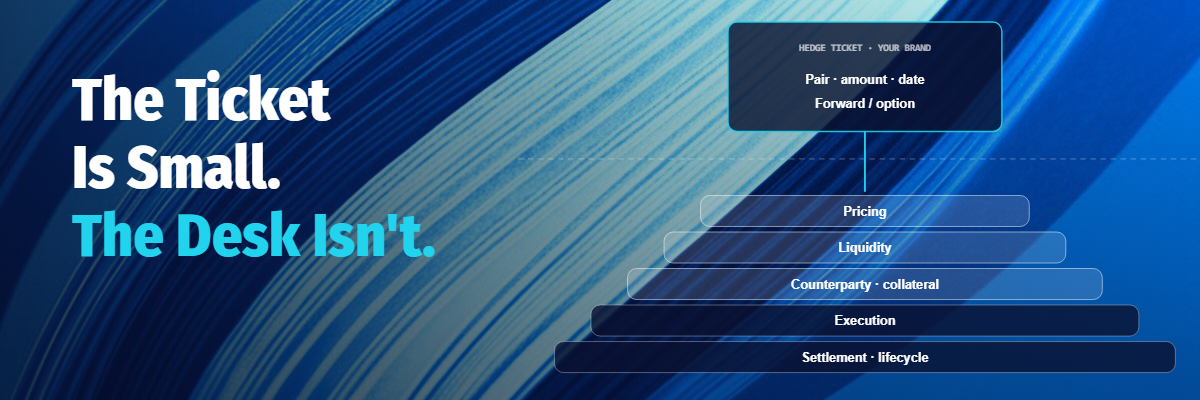
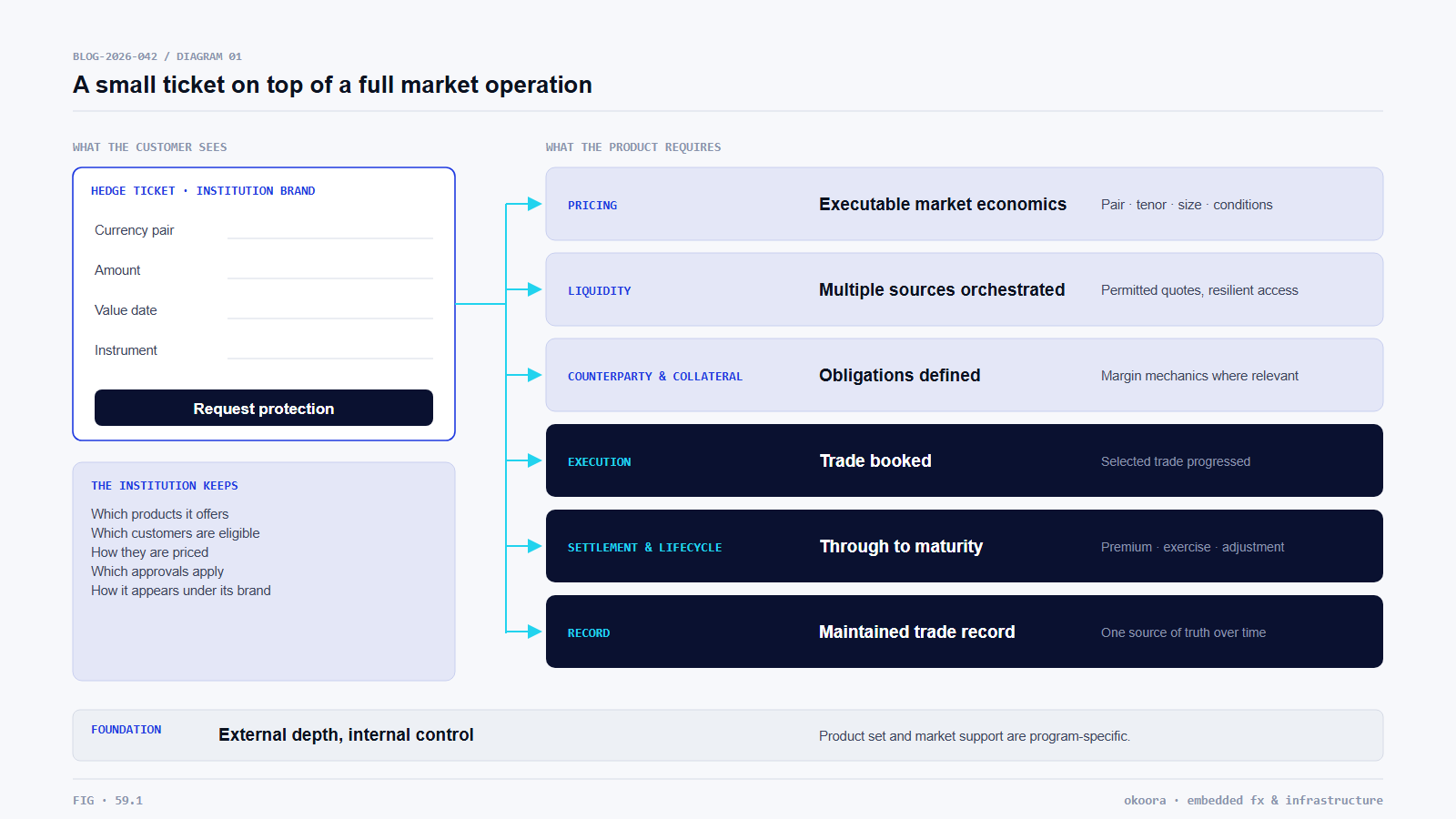
To the customer, an FX hedge can look like a few inputs: currencies, amount, date, instrument and price. The operational reality behind those fields is much larger. A provider has to price the transaction, source or manage liquidity, establish a counterparty model, handle collateral where required, book the trade, manage settlement and maintain the lifecycle after execution. Building all of that internally is a very different project from adding a user interface.
Pricing needs market depth
A credible hedging service needs access to executable market economics rather than a static reference rate. The price can depend on currency pair, tenor, instrument, market conditions, transaction size and provider availability. If the institution wants to add its own customer markup, the system also needs to separate the underlying market economics from the final customer price.
Liquidity is an operating capability
Access to multiple liquidity sources can improve resilience and price discovery, but it also creates orchestration work. Providers differ by currency, instrument, credit appetite and moment. The institution needs a way to obtain permitted quotes and progress the selected trade without manually coordinating every transaction across multiple relationships.
Counterparty and collateral cannot be treated as an API detail
A hedge creates obligations beyond the moment of execution. The arrangement has to define who is counterparty, what collateral or margin mechanics apply, what happens through the life of the trade and how settlement is handled. These responsibilities are part of the product even if the end customer never sees the infrastructure that carries them.
The lifecycle continues after the trade is booked
A forward may later need settlement or an adjustment. An option has premium, exercise and maturity considerations. A customer exposure may change before the hedge matures. A useful service therefore needs a maintained record and operational lifecycle, not only an execution endpoint. Otherwise the institution has embedded the trade but not the financial responsibility around it.
The institution still needs commercial and customer control
Using external infrastructure does not mean giving up the product. The institution can own which products it offers, which customers are eligible, how it prices them, what approvals apply and how the experience appears under its brand. The infrastructure provider supplies the financial depth that would otherwise require a dealing operation, market connectivity and specialist processes to build internally.
Where Okoora fits
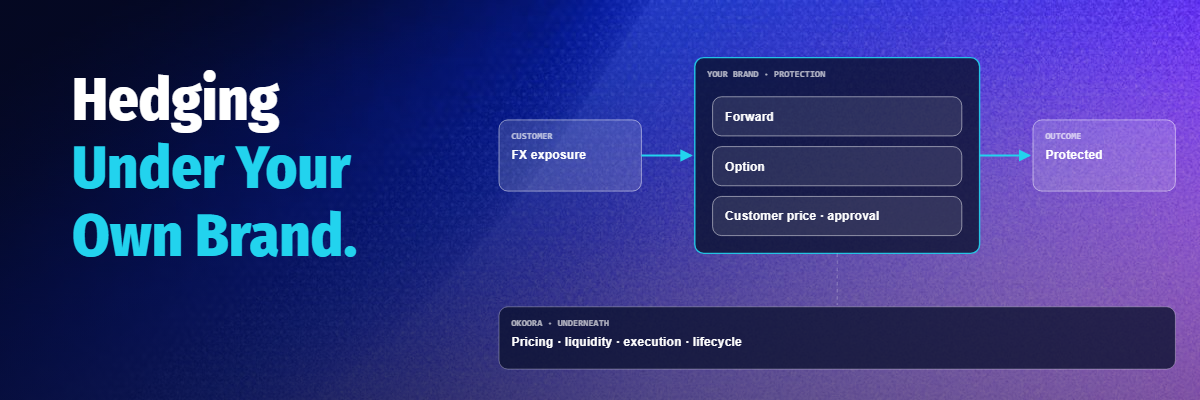
Okoora provides embedded FX and hedging infrastructure behind financial institutions and platforms. Supported hedging products can be delivered under the customer's brand while Okoora carries the market, pricing, execution and operational capability underneath. That allows the institution to create a real hedging product line without rebuilding a full dealing room from zero.