 Okoora TeamOkoora
The customer already has the exposure. The question is who serves it
A bank, payment company, brokerage or financial platform may already serve businesses that pay suppliers abroad, receive foreign currency or operate across multiple markets. Those customers have FX exposure whether or not the institution currently offers hedging. If protection is not available inside the relationship, the customer has to go somewhere else to manage it. That is both a service gap and a commercial opportunity.
Start with the customer need, not the derivatives catalog
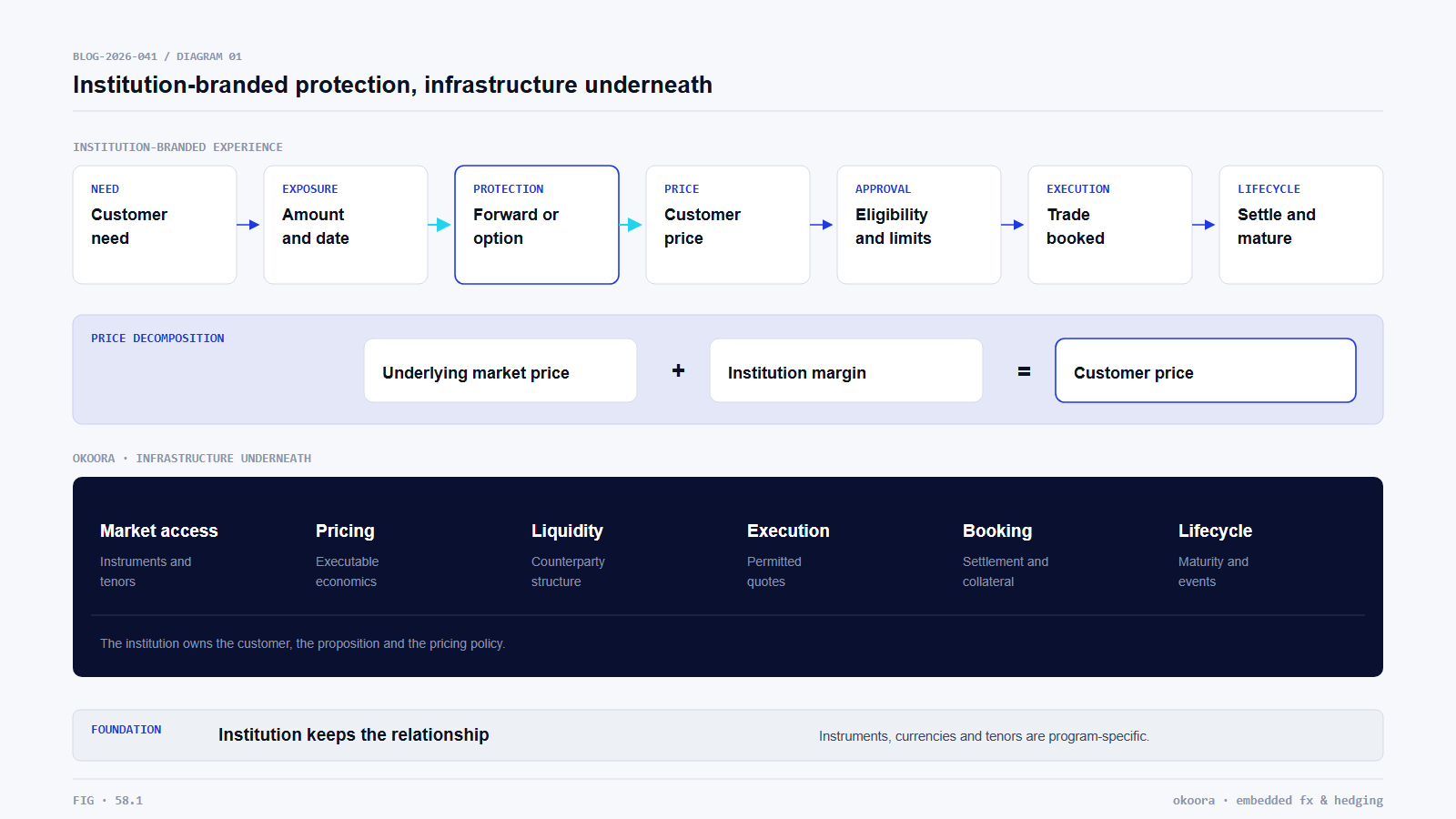
The useful customer conversation is usually not “which structured product would you like?” It is “what amount are you exposed to, when does it matter, and what outcome are you trying to protect?” The institution can then present permitted protection choices such as a forward or option when they fit the need. Product sophistication should sit underneath a simple explanation of the financial job.
A branded hedging service needs real market infrastructure behind it
Offering a hedge requires more than putting a trade ticket into the user interface. The institution needs access to pricing, instruments, liquidity and a counterparty or execution structure. It needs to know which currencies and tenors are supported, what collateral or margining applies where relevant, and how the trade is carried through booking, settlement and lifecycle events.
Pricing and customer economics belong in the product
A financial institution serving its own customers must also decide how the service is priced. The underlying market price, the customer price and the institution's margin are different things. A useful system makes that distinction explicit and applies the institution's commercial rules consistently, rather than treating the provider quote as the complete customer proposition.
The institution should keep the customer relationship
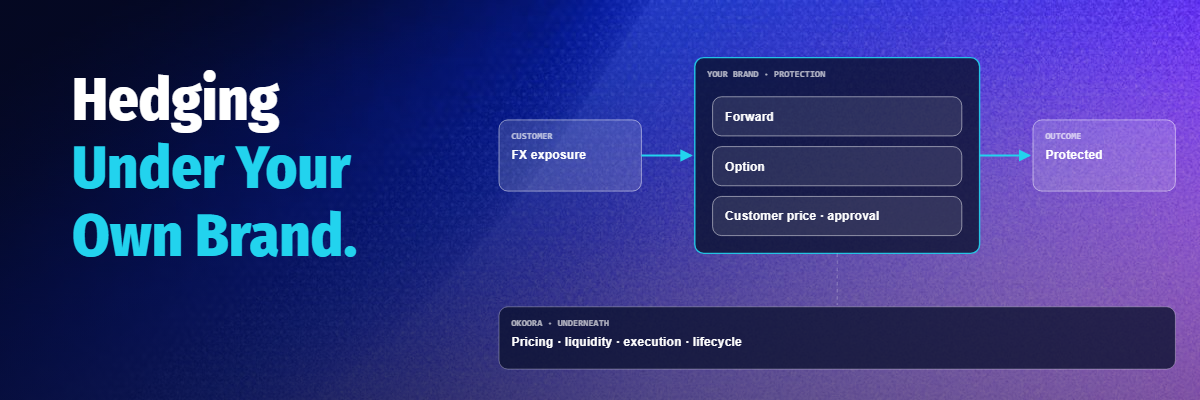
A white-label model is strongest when the customer continues to experience the financial service as part of the institution it already trusts. The institution owns the customer proposition, pricing policy and relationship. The infrastructure underneath provides the financial capability required to make that service real. This is fundamentally different from referring the customer to a third party and losing the financial activity outside the relationship.
Hedging can expand naturally from conversion
Many institutions begin with spot FX because the customer already converts currency. The next need may be a future-dated conversion or protection against an upcoming obligation. The same customer context can support a deeper service without forcing the institution to build a separate market operation for every instrument. The product line can deepen as the customer's financial activity becomes more sophisticated.
Where Okoora fits
Okoora enables financial institutions and platforms to embed FX products under their own brand, including currency conversion and supported hedging capabilities. Okoora provides the financial infrastructure, market access, pricing and execution depth underneath, while the institution keeps the customer experience and commercial relationship in front.