 Okoora TeamOkoora
The first embedded layer is not always the end of the distribution chain
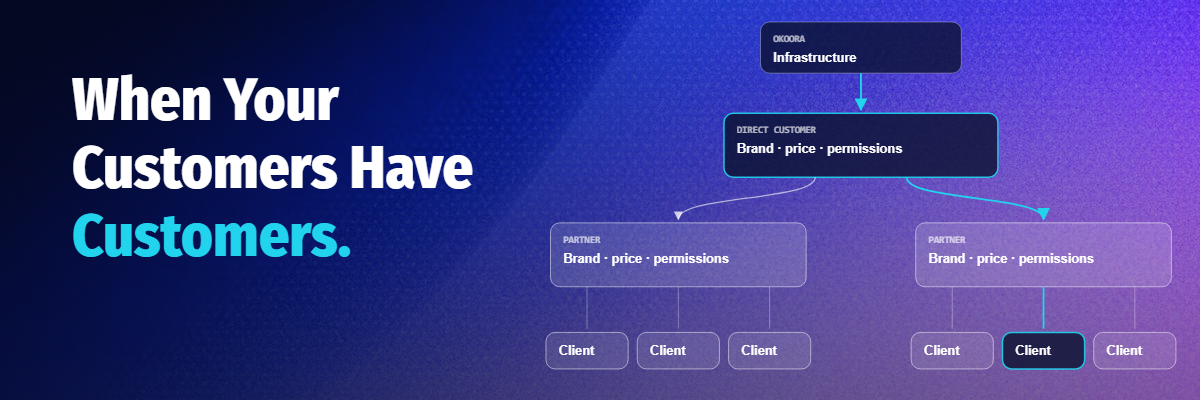
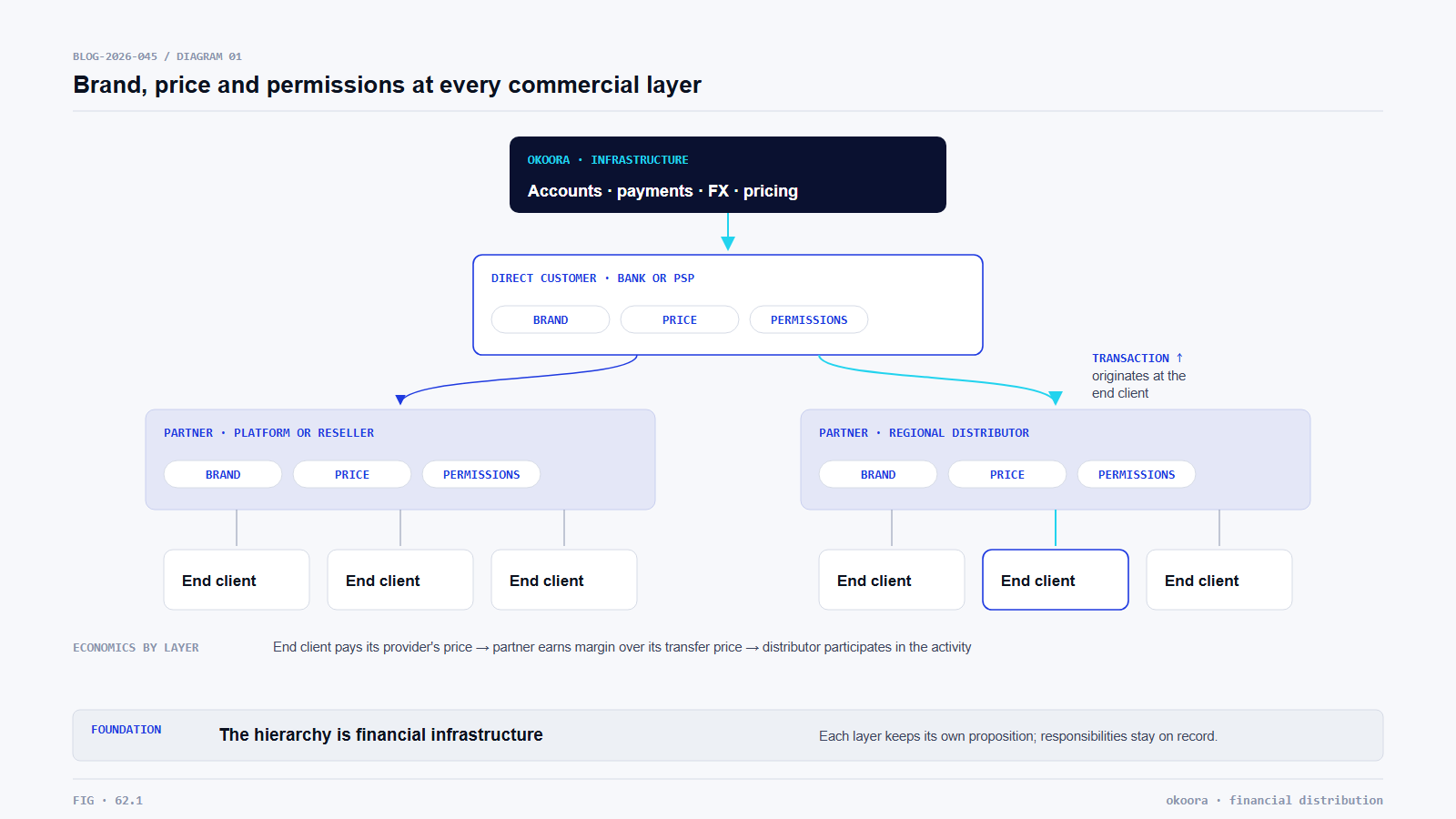
A bank may serve fintechs that serve businesses. A payment institution may work through regional partners. A software platform may support resellers or marketplaces that have their own merchants. In each case, the company integrating the financial infrastructure is not necessarily the final customer-facing organization. The financial service has to survive another layer of distribution without losing control of identity, pricing, balances, permissions and economics.
Every layer needs its own commercial identity
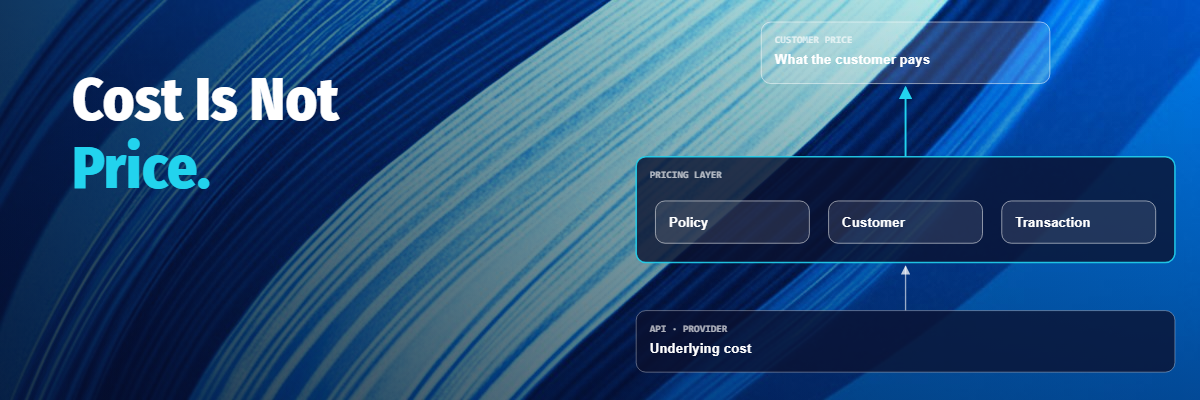
A multi-tier financial model cannot assume that one price or one brand applies everywhere. The organization at the top may set economics for its direct partner. That partner may need to set a different customer price for the businesses it serves. The final transaction should preserve enough context to know which layer originated it, which price applied and how the economics should be attributed across the chain.
Customer hierarchy becomes financial infrastructure
In a simple B2B integration, the direct customer is usually the account boundary. In a B2B2X model, the system needs to understand parent, partner and end-customer relationships. Accounts, wallets, payments or FX activity may belong to the end client while permissions, commercial rules and reporting roll up through one or more partner levels. The hierarchy is no longer just CRM metadata. It affects how financial activity is operated.
Branding and operating responsibility can separate by layer
The end business may see the brand of the partner it bought from, while the partner itself operates on infrastructure supplied by the level above. The infrastructure provider may be invisible to the end client. That can create a clean distribution model, but only if the underlying system keeps the legal and operational responsibilities clear. White-label presentation should never mean that the real financial structure disappears from the operating record.
Pricing and margin need to flow through the tree
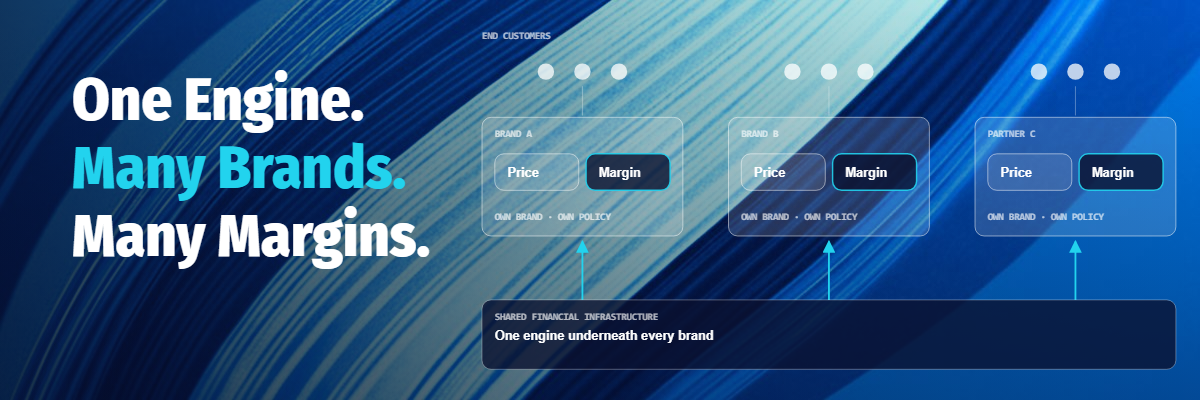
A transaction at the bottom of the chain can create economics at more than one level. The end customer pays the price set by its provider. The provider may earn a margin relative to the price it receives from the level above. The top-level distributor may participate in the economics of the overall activity. Managing this reliably requires a pricing and settlement model that understands the hierarchy rather than treating every end client as an unrelated direct customer.
The infrastructure should be reusable as the network grows
The point of a layered model is leverage. A new partner should not require rebuilding the entire financial stack. The top-level integration, financial capabilities and operating controls should be reusable while each new layer receives the configuration, branding, pricing and permissions appropriate to its role. That is what turns infrastructure into a distribution system rather than a collection of bespoke integrations.
Where Okoora fits
Okoora supports organizations that distribute financial capabilities through customer and partner networks. Accounts, collections, payouts, FX, pricing and control can operate across layered relationships while each level maintains its own customer proposition. This allows banks, PSPs, platforms and distributors to extend financial services through the networks beneath them without creating a separate infrastructure stack for every downstream relationship.