 Okoora TeamOkoora
Shared infrastructure does not require a shared customer proposition
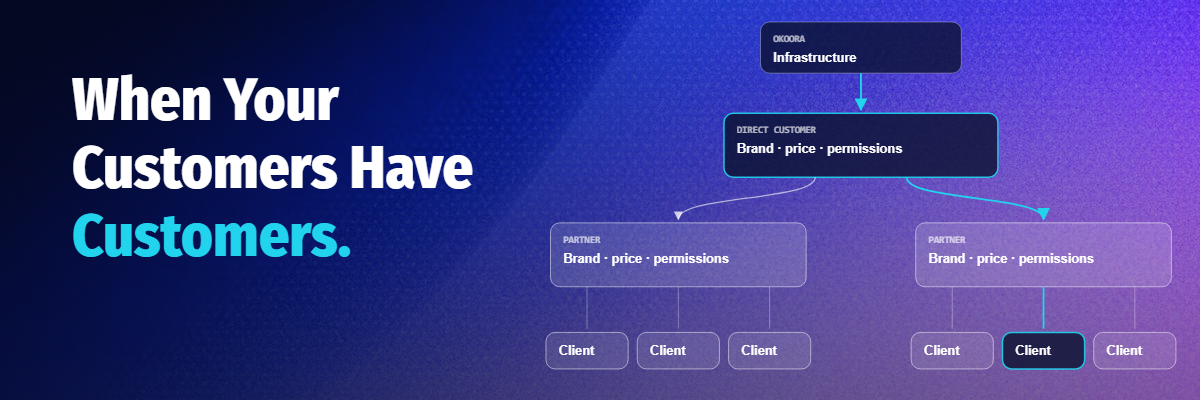
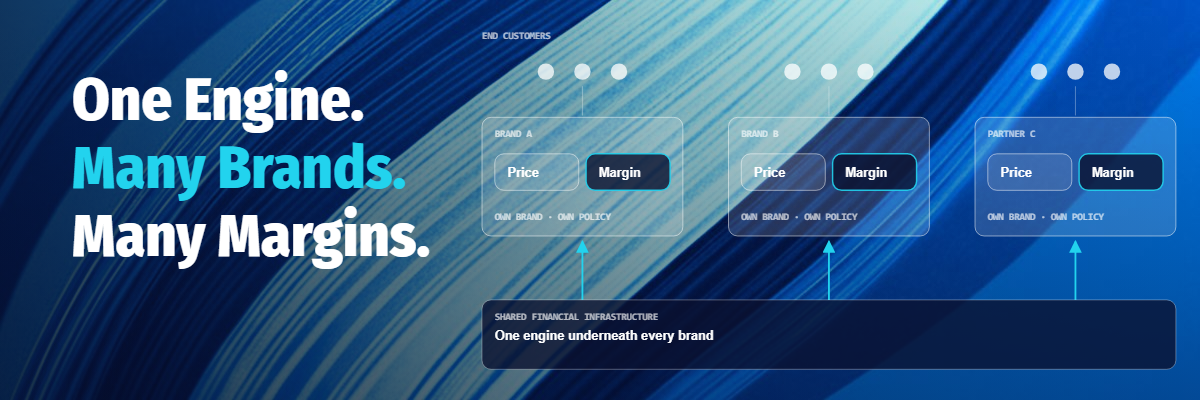
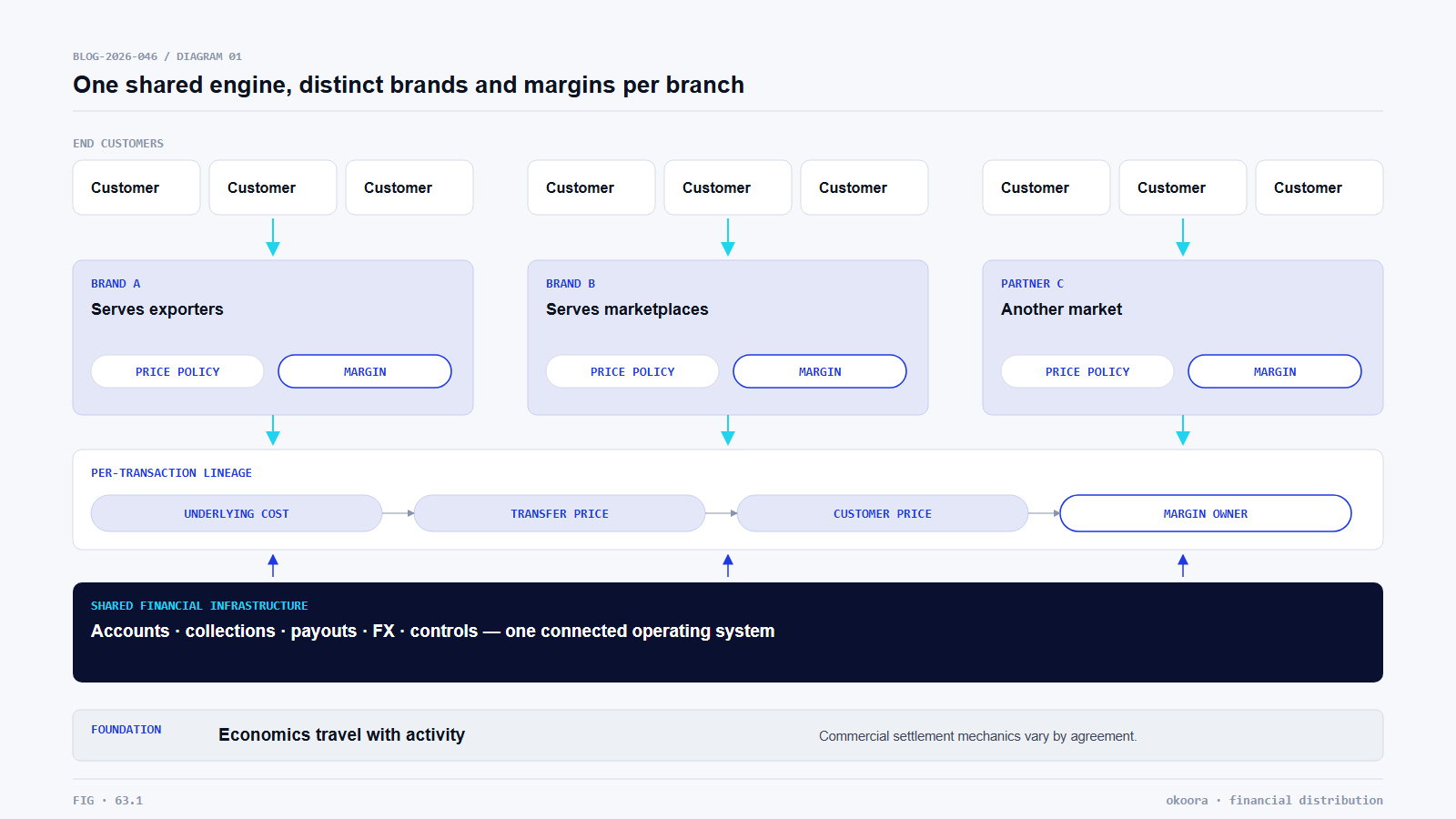
A bank, payment company or platform may want to distribute the same financial capability through several brands or partners. The underlying accounts, payments, FX or hedging infrastructure can be common while the customer experience differs by distributor. One partner may serve exporters. Another may serve marketplaces. A third may operate in a different country. The financial engine can be shared without forcing every layer into one commercial identity.
Brand belongs at the customer relationship layer
The organization serving the end customer should be able to present the financial service in the context of its own relationship. That may include its interface, product language, support model and pricing. The infrastructure underneath should provide the financial capability without competing for ownership of that experience. This is the foundation of a real white-label distribution model.
Price can also belong to each commercial layer
If a financial service travels through several partners, one universal end-customer price can destroy the economics of the distribution chain. Each layer may need to buy the service at one set of economics and sell it at another. The system therefore has to separate underlying cost, transfer price, end-customer price and margin, and preserve which commercial entity owns each part of the transaction.
Margins need a transaction-level record
When a conversion, collection or payout occurs at the end of the network, the system should be able to attribute the financial event to the correct customer and partner hierarchy. That is what allows the economics to be calculated and reported consistently. Without transaction-level lineage, multi-tier monetization turns into spreadsheets, invoices and disputes over who earned what.
Automation changes the operating burden
A distribution model becomes difficult to scale if every partner requires manual invoicing, transaction extraction and revenue reconciliation. The stronger design is for pricing and economic attribution to be part of the transaction itself, with the resulting amounts accumulated and settled according to the agreed model. The exact commercial mechanics can vary, but the principle is the same: economics should travel with activity.
The same infrastructure can support more than one financial job
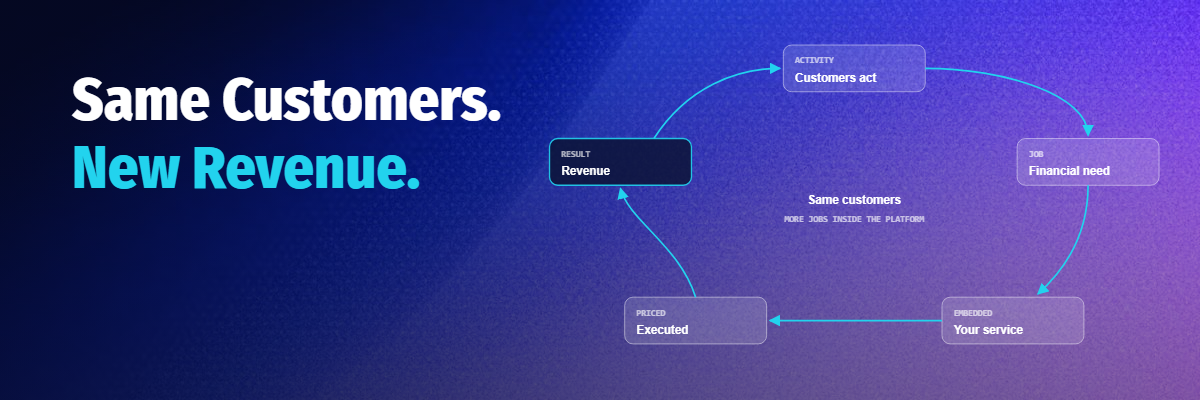
Once the hierarchy, identity, pricing and controls exist, the network can potentially support adjacent capabilities such as collections, payouts, FX or accounts without rebuilding the entire partner structure. That makes the infrastructure more valuable over time because the commercial relationship and operating context can be reused across additional financial services.
Where Okoora fits
Okoora enables financial institutions, PSPs, platforms and other distributors to deliver financial capabilities through their own customer and partner networks. The same underlying financial infrastructure can support distinct brands, pricing policies and transaction economics while preserving one connected operating system underneath. That turns financial infrastructure from a single integration into a scalable distribution asset.