 Okoora TeamOkoora
If you think foreign exchange (FX) risk is just another line item in the CFO’s playbook, think again.
Currency volatility now determines whether global deals close, whether margins hold, and whether growth strategies scale or stall. And yet, most businesses are still patching the problem with outdated FX software: siloed tools, manual trades, and dashboards built for a different era.
That model is breaking. And a new one is taking its place.
A new class of infrastructure is emerging: embedded FX infrastructure, designed not to help manage currency risk, but to eliminate the need to manage it at all.
This shift isn’t cosmetic. It’s foundational. And for analysts, strategists, and investors, it signals a new category with massive implications for how finance is built, sold, and scaled.
In this article, we’ll unpack the real difference between FX software and FX infrastructure, and explain why infrastructure (not tools) is where the future (and the upside) lies.
What is FX software?
FX software refers to standalone platforms or tools designed to help businesses manage currency exchange operations, typically through manual or semi-automated workflows. These tools were built in an era when currency management was a back-office function, not a core strategic driver.
FX software usually offers:
- Currency conversion dashboards
- Spot and forward contract booking
- Exposure tracking and basic reporting
- Manual hedge execution
- Limited integrations with ERP (Enterprise Resource Planning) or treasury systems
While these tools provide visibility, they don’t offer protection. FX software is reactive, it waits for users to detect risk, analyze data, and execute hedges. It often lives outside a company’s operational systems, requiring constant user intervention and FX knowledge to function effectively.
In short:
FX software helps you see your risk, but it doesn’t shield you from it.
Key limitations:
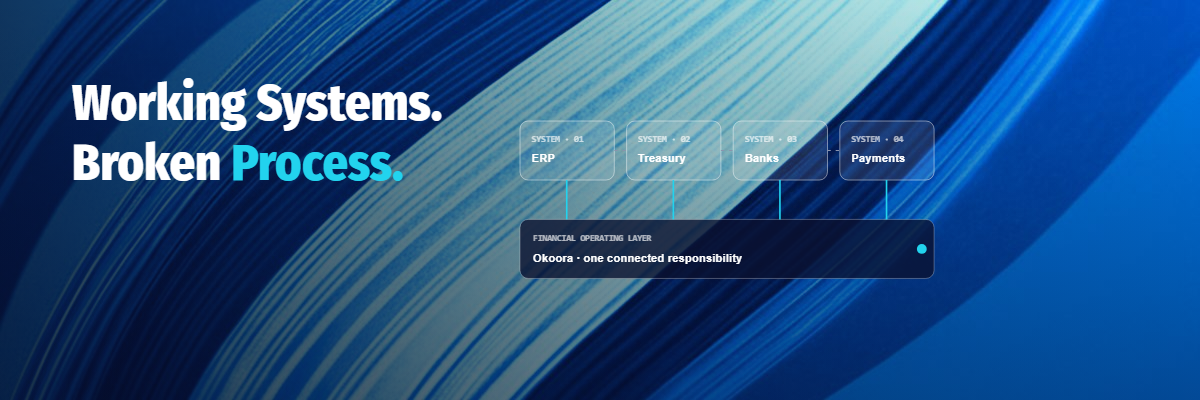
- Operates in silos, disconnected from real-time payment and finance workflows
- No automated exposure detection or hedging strategy
- Requires in-house expertise to use effectively
- Offers no access to institutional-grade liquidity
- Built as a dashboard, not as a revenue-generating engine
What Is FX infrastructure?
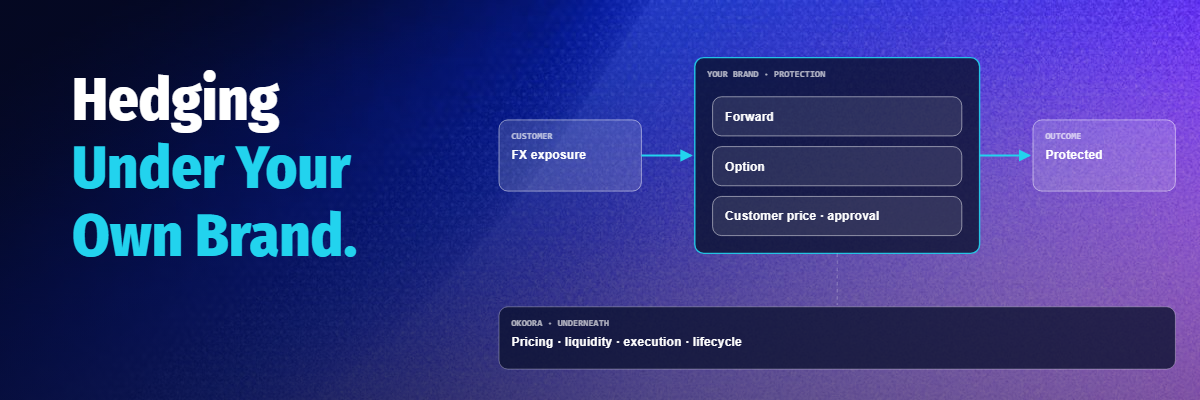
FX infrastructure is a next-generation, embedded solution that transforms FX from a manual process into an automated, invisible financial layer. Instead of being a tool you log into, it’s an engine that runs inside your platform, analyzing exposure, triggering smart hedges, and executing transactions in real time.
FX infrastructure is embedded. Intelligent. Always on.
It integrates directly into financial ecosystems —banks, ERP systems, payment platforms, or marketplaces —to provide end-to-end FX risk management without disrupting user workflows.
FX infrastructure typically includes:
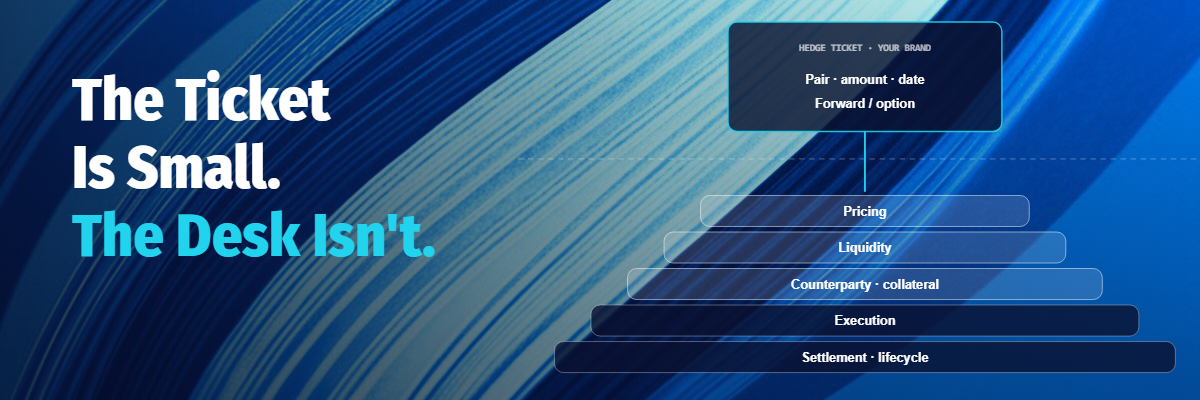
Real-time exposure analysis across transactions, balances, and forecasts
AI-driven hedging recommendations
Automated trade execution through deep liquidity pools
Built-in compliance and reporting
Modular deployment: API, white-label, or full platform
In short:
FX infrastructure doesn’t help you manage currency risk; it makes currency risk disappear.
Key benefits:
- Embedded directly into core financial operations
- Fully automated from detection to execution
- Delivers real-time insights and proactive protection
- Monetizes FX flows through spread capture and infrastructure pricing
- Enables scalability across industries and currencies
FX infrastructure vs. FX software: key differences at a glance
|
Category |
FX Software |
FX Infrastructure |
|
Purpose |
Helps users manually manage FX risk |
Automates and embeds FX protection into financial systems |
|
Integration |
External tool or dashboard |
Embedded via API or white label into ERPs, banks, platforms |
|
Risk Management |
Manual tracking and hedging |
Real-time exposure analysis and automated hedge execution |
|
User Dependency |
Requires FX knowledge and constant input |
No FX expertise needed — system acts autonomously |
|
Liquidity Access |
Limited or external |
Direct, institutional-grade liquidity embedded in flow |
|
Scalability |
Difficult to scale across teams or systems |
Modular, infrastructure-grade, scales with the business |
|
Revenue Model |
Cost center (licenses, consulting) |
Monetized through FX flow: spreads, usage, margin sharing |
|
Compliance |
Often disconnected from reporting layers |
Built-in regulatory alignment and audit-ready reporting |
|
Value Proposition |
A tool to manage risk |
A layer that absorbs and monetizes risk seamlessly |
In other words
- FX software is a tactical patch.
- FX infrastructure is a strategic enabler, and a monetization engine.
As embedded finance reshapes the industry, FX infrastructure is following the same arc as payments, payroll, and data connectivity. The winners won’t be the platforms selling access. They’ll be the ones monetizing the flow.
Why this shift matters now
The difference between FX software and FX infrastructure matters because the nature of currency risk has changed, and so has what’s required to manage it.
FX software was built to support teams. It helped finance departments monitor exposure and execute hedges manually. But that model assumes there’s time to react, that risk is predictable, and that someone in-house has the expertise to manage it.
Today, none of that holds true.
Currency risk moves fast. It’s unpredictable. And it impacts critical business functions- pricing, planning, profitability, all in real time. Finance teams can’t afford to wait, toggle between tools, or rely on spreadsheets to protect margins.
What’s needed is a system that sees the risk before it hits, acts immediately, and does it all behind the scenes, without requiring teams to even think about FX.
That’s what FX infrastructure delivers.
It transforms FX risk from a disruptive force into a fully automated, embedded layer of protection: always on, always optimizing, and built to scale with the business.
FX infrastructure: the layer that wins
This new layer doesn’t just improve FX management. It transforms it into a seamless part of how money moves, how businesses grow, and how platforms monetize global activity.
FX infrastructure enables:
Smarter financial automation
Real-time risk mitigation at scale
New revenue models tied to transaction flow
Faster time-to-market for global financial products
For operators, it removes complexity.
For platforms, it drives differentiation.
For investors, it offers scale, margins, and momentum. Not in theory, but in-market.
As embedded finance matures, infrastructure will define the next wave of winners.
FX is no exception.
Ready to see it in action? Schedule a demo.