 Okoora TeamOkoora
The customer wants an account. The platform needs an operating model behind it
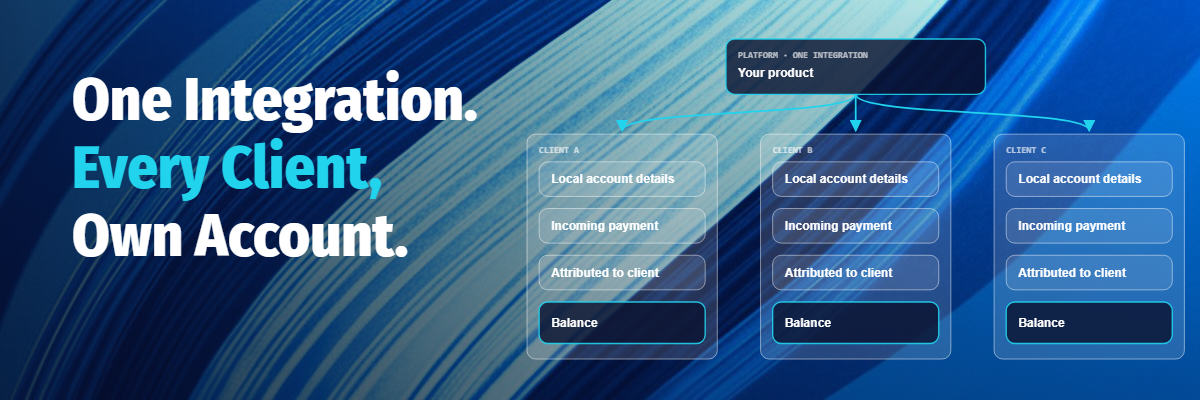
For a software platform, marketplace, payment company or business network, giving each client local account details can be one of the most visible ways to make financial capability part of the product. The end customer sees an account it can use to receive money. The platform sees a much larger system underneath: account creation, identity, currency, incoming rails, transaction attribution, balances, conversion, payout and the records required to keep the experience coherent.
Start with the customer job, not the banking architecture
The end customer rarely cares how many providers sit underneath the service. It wants to give a payer the right details, receive money in the expected currency, know when it arrived and use the balance. A strong product therefore begins with the account experience the customer recognizes, while the platform handles provider connectivity, permissions and operating rules in the background.
One client, one account relationship is a powerful product primitive
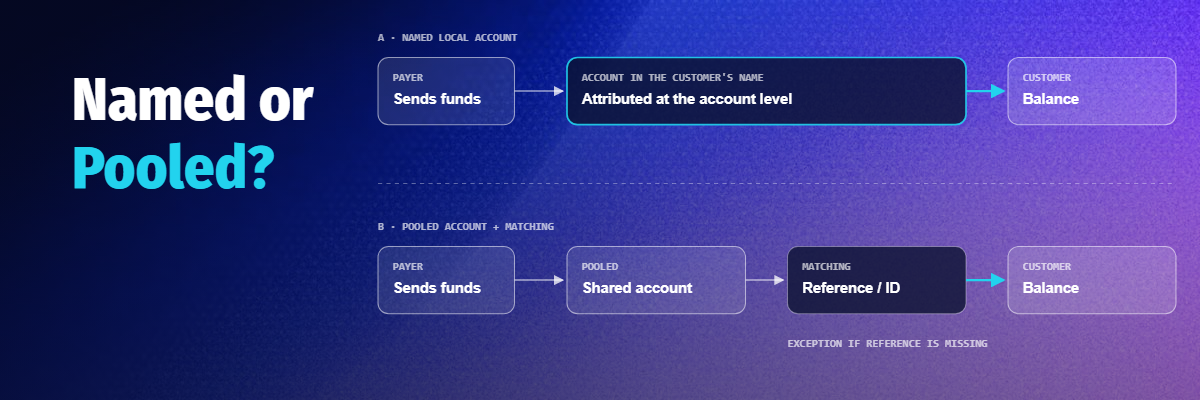
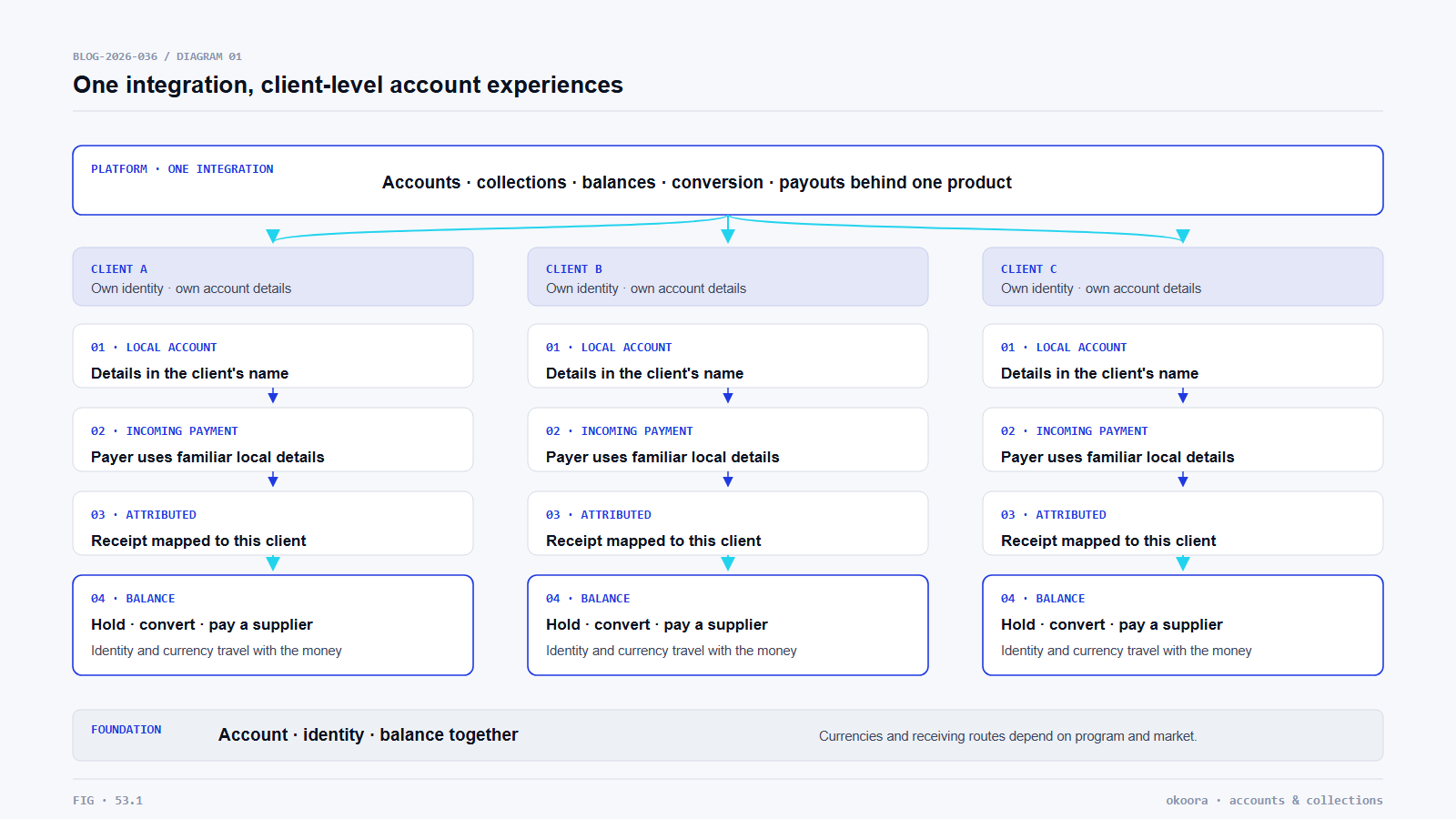
When each client can receive through account details associated with its own identity, the platform can make collections easier to understand. The payer sees a familiar beneficiary relationship. The platform has a direct key for attributing the receipt. The client sees the result in its own balance. That can remove a layer of ambiguity that otherwise has to be solved by references, support tickets or manual matching.
The account becomes more valuable when it connects to what happens next
An account on its own is only a destination. In a useful financial product, incoming money can become a working balance. The client may want to hold it, convert it, pay a supplier, transfer it elsewhere or reconcile it against commercial activity. These actions should not require the platform to rebuild context from scratch each time. The account, transaction, currency and client identity should travel with the financial work.
Multi-currency changes the design problem
A client operating internationally may need different currencies and different local details. That creates product questions around which currencies are enabled, which receiving routes are available, how balances are represented and when conversion is required. The platform should present the experience simply while preserving the actual source, currency and execution conditions underneath.
Reconciliation should be designed in from the start
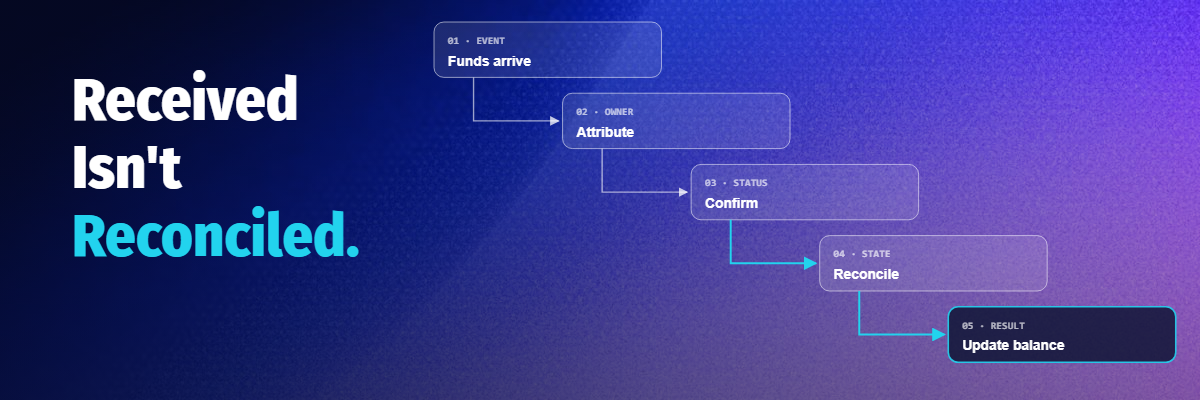
Receiving money is not complete when a webhook says that a deposit arrived. The platform needs to know whose money it is, what commercial activity it relates to where relevant, whether the balance is available, and what downstream record must change. The cleaner this state is, the easier it becomes to build payouts, FX, reporting and financial controls on top of the same customer relationship.
Where Okoora fits
Okoora enables organizations to embed accounts, collections, payments, conversions and money movement under their own brand. The platform can give customers a familiar financial experience while Okoora operates the financial infrastructure underneath. That lets the platform start from a simple customer need, receiving money locally, and expand into a broader financial service without assembling every capability independently.