 Okoora TeamOkoora
White-label collections are a product, not a payment endpoint
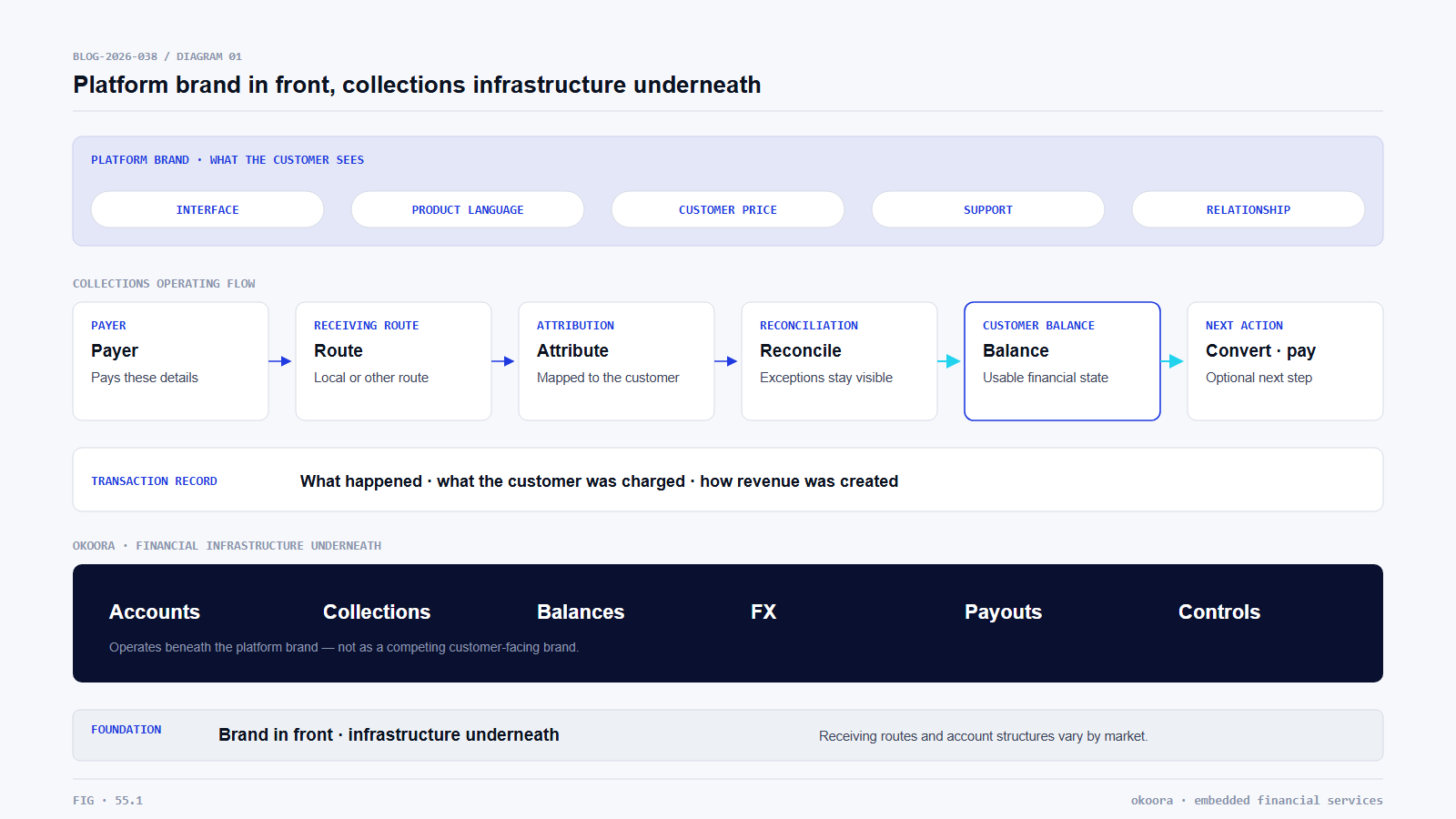
A platform that wants customers to receive money under its own brand can technically expose an account number or a pay-in instruction. That is only the visible edge of the product. A credible collections experience also needs customer identity, account structure, local and international receiving routes, transaction status, attribution, balances, reconciliation, currency handling and a controlled path for what the customer does with the funds next.
Begin with the payer experience
The person sending the money should encounter a simple instruction: pay these details, in this currency, using this route. Where local receiving details are available, the payer can often use a familiar domestic payment method. Where they are not, another route may be required. The platform should not expose the complexity of the infrastructure unless the user needs it, but it must still preserve the real conditions underneath the payment.
The end customer needs a clear financial identity
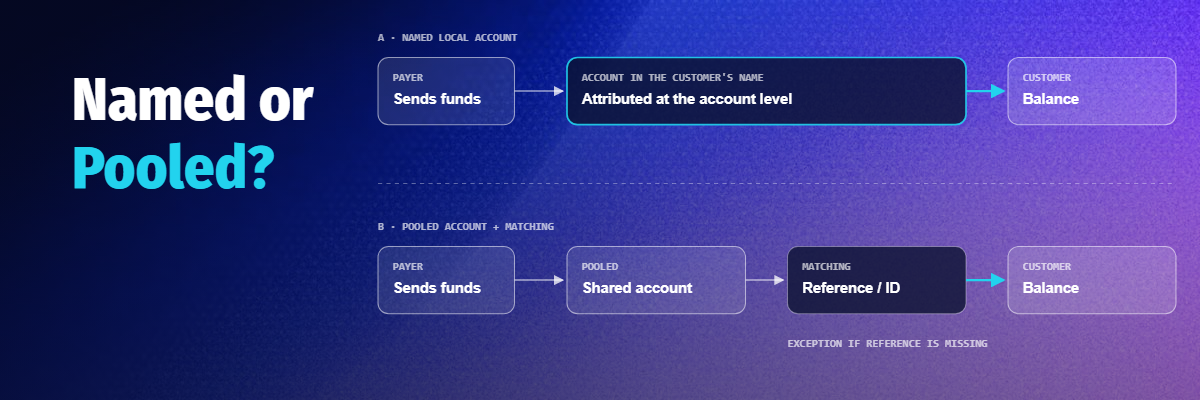
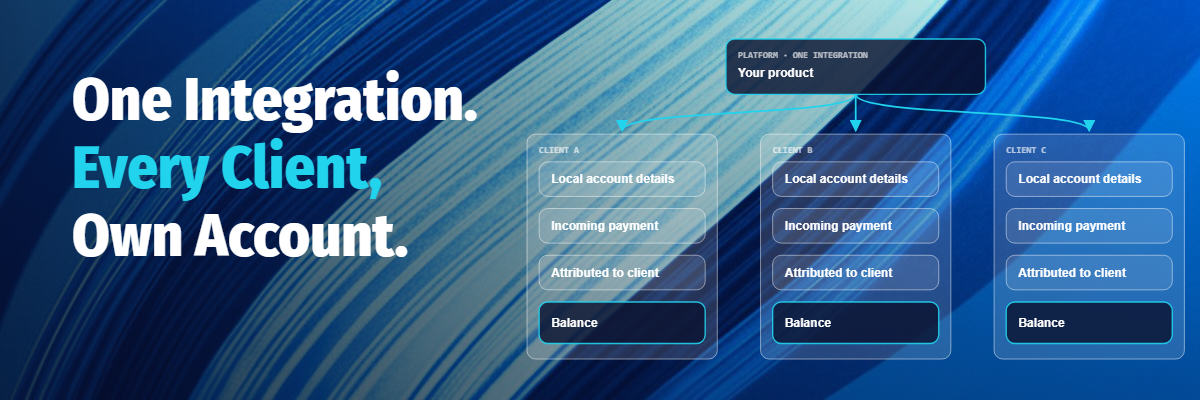
If the platform serves many businesses, every incoming payment must resolve to the right customer. Named account details can make that relationship explicit. Other structures may use virtual identifiers or reference-based matching. Whatever the mechanism, the product needs a dependable mapping between the incoming payment and the customer balance it should change.
Reconciliation belongs inside the experience
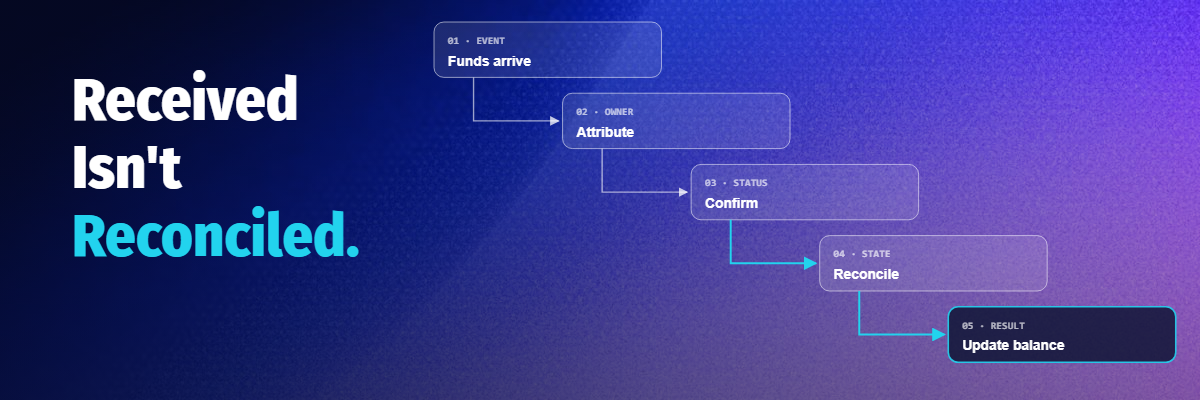
A white-label collection product becomes expensive to operate when successful payments still create manual work. The platform should know when funds arrive, what status is supported, which customer they belong to and whether anything remains unresolved. Exceptions should be visible as exceptions. Normal receipts should become usable financial state without creating a support process around every transaction.
Collections become more valuable when connected to FX and payouts
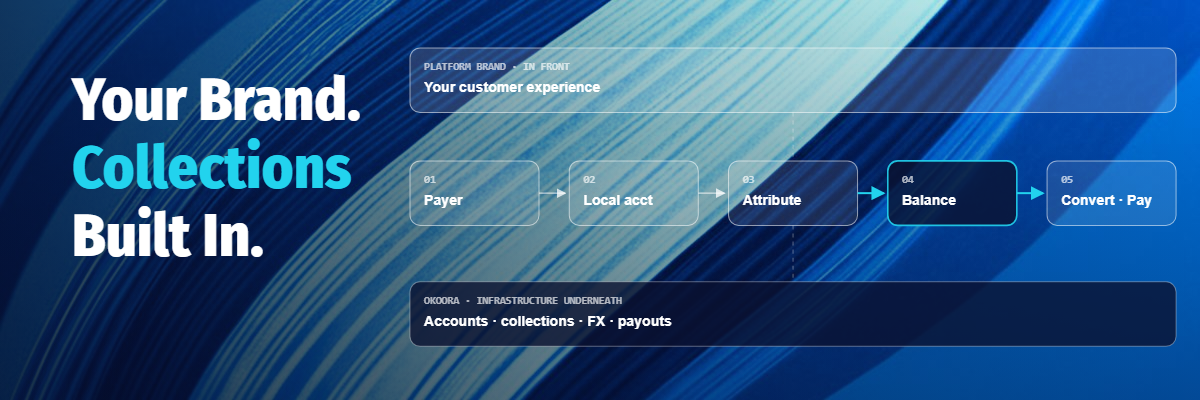
Many customers do not receive money merely to leave it where it arrived. They may need to hold several currencies, convert into another currency, pay suppliers or move funds to another destination. Building these functions as unrelated integrations fragments the customer experience and multiplies the operational burden. A stronger model treats collections, balances, conversion and payout as connected parts of one financial service.
Pricing and economics should be considered early
For a platform, collections can also be part of the commercial model. The platform may price account access, collection fees, conversion, payout or another supported activity. That makes transaction records and pricing logic commercially important, not merely operational. The ability to trace what happened, what the customer was charged and how revenue was created becomes part of the product architecture.
Where Okoora fits
Okoora enables organizations to offer accounts, collections, conversion and money movement under their own brand. The financial infrastructure operates underneath while the customer relationship remains with the platform. That lets the organization build a coherent collections product instead of assembling a separate account provider, payment provider, FX layer and reconciliation workflow for each capability.