 Okoora TeamOkoora
A collection is not finished when the money arrives
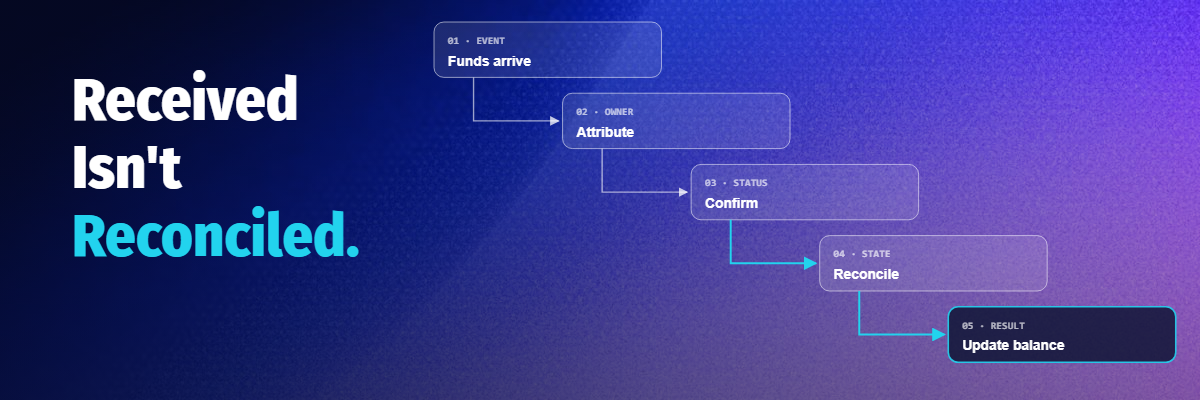
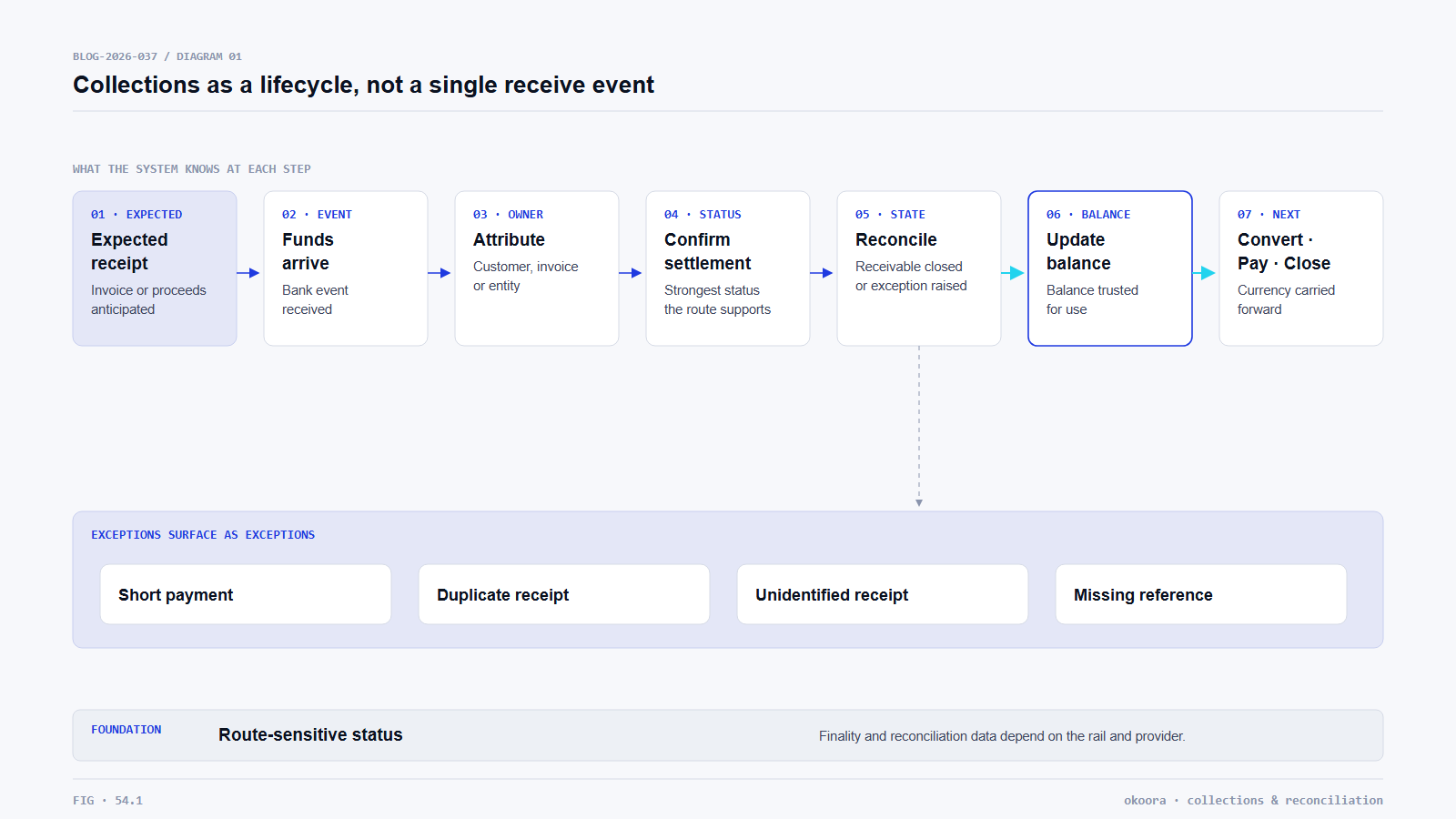
Finance teams and platforms often describe collections as an inbound payment capability. That is accurate but incomplete. The useful business outcome is not merely that money reached an account. The financial job is complete when the system knows who paid, which customer or obligation the receipt belongs to, what currency and settlement state applies, what balance changed, and whether any exception still needs attention.
Expected money and received money are different states
A business may know that a customer is expected to pay an invoice next week. A platform may know which merchant should receive proceeds from a transaction. When the funds arrive, the system has to connect the actual receipt to the expected financial event. That connection can be straightforward when account identity or payment references are strong. It becomes more difficult when amounts differ, references are missing, timing changes or one receipt covers several obligations.
Attribution is the first operating step
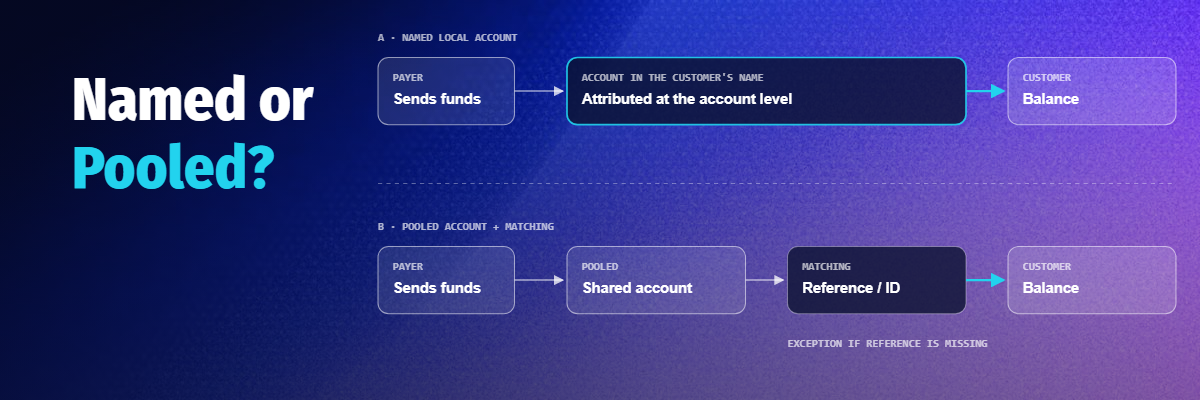
Every incoming payment needs a financial owner. In a platform context, that may mean identifying the correct end client. In a corporate context, it may mean matching a receipt to the correct customer, invoice, entity or account. Without reliable attribution, the money exists but the financial state remains uncertain. Someone still has to investigate before the funds can be trusted for reporting or further use.
Settlement status matters
A notification that money was initiated is not the same as a confirmed receipt. Different rails and providers expose different levels of completion. A collections workflow should preserve the strongest status the underlying route can support and avoid presenting money as final before the evidence supports that conclusion. The goal is not a more complicated interface. It is a more trustworthy balance.
Reconciliation turns the receipt into financial state
Once the payment is attributed and the relevant completion state is known, the system can update the customer balance and the commercial record around it. That can mean closing an expected receivable, updating an account, recording a transaction and surfacing any short payment, duplicate, unidentified receipt or other exception. Reconciliation is what turns an incoming payment from a bank event into usable operating truth.
Currency can create another decision
If the payment arrives in a currency different from the currency the customer ultimately needs, the collection may lead directly into conversion. A platform may allow the customer to hold the currency. A business may convert it to fund upcoming obligations. The important point is continuity: the incoming payment should carry its identity, amount and currency into the next financial action instead of forcing the user to reconstruct them manually.
Where Okoora fits
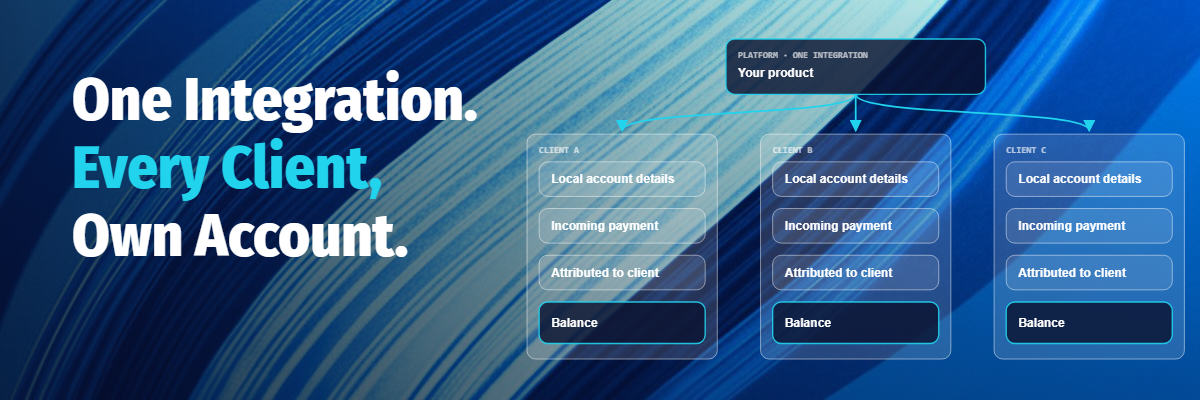
Okoora connects receiving accounts, collections, balances, FX and financial controls in one operating environment. Incoming funds can be attributed, reflected in the correct balance and carried into conversion or payout where relevant. That creates a more complete collection experience for businesses and for platforms offering financial services to their own customers.