 Okoora TeamOkoora
The account structure changes the customer experience before any payment is made
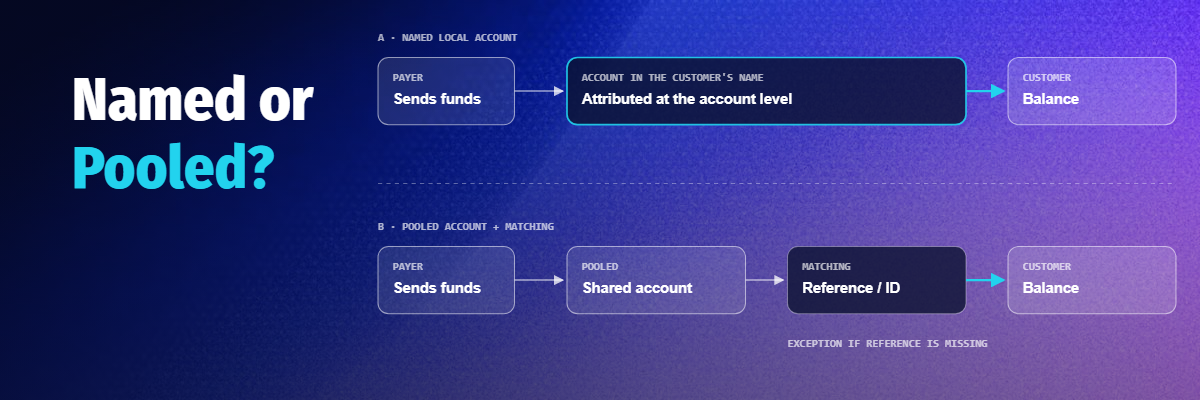
When a business or platform wants to let customers receive money, the first question often sounds simple: where should the payer send the funds? Underneath that question sits a structural choice that can shape reconciliation, customer confidence, operational effort and the way the financial service can scale. One common model gives the customer local account details in its own name. Another receives money into a pooled account and uses a reference, virtual identifier or ledger entry to determine who the money belongs to.
A named local account is more than a different set of bank details
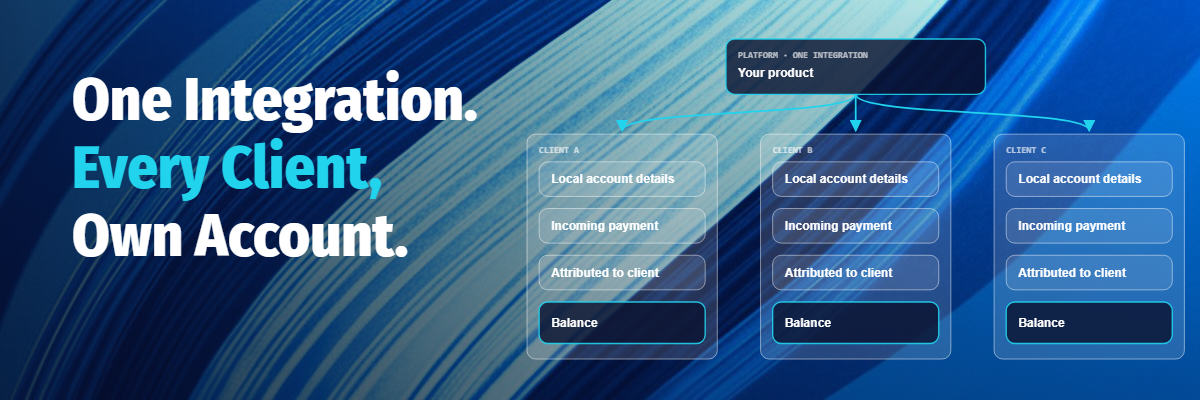
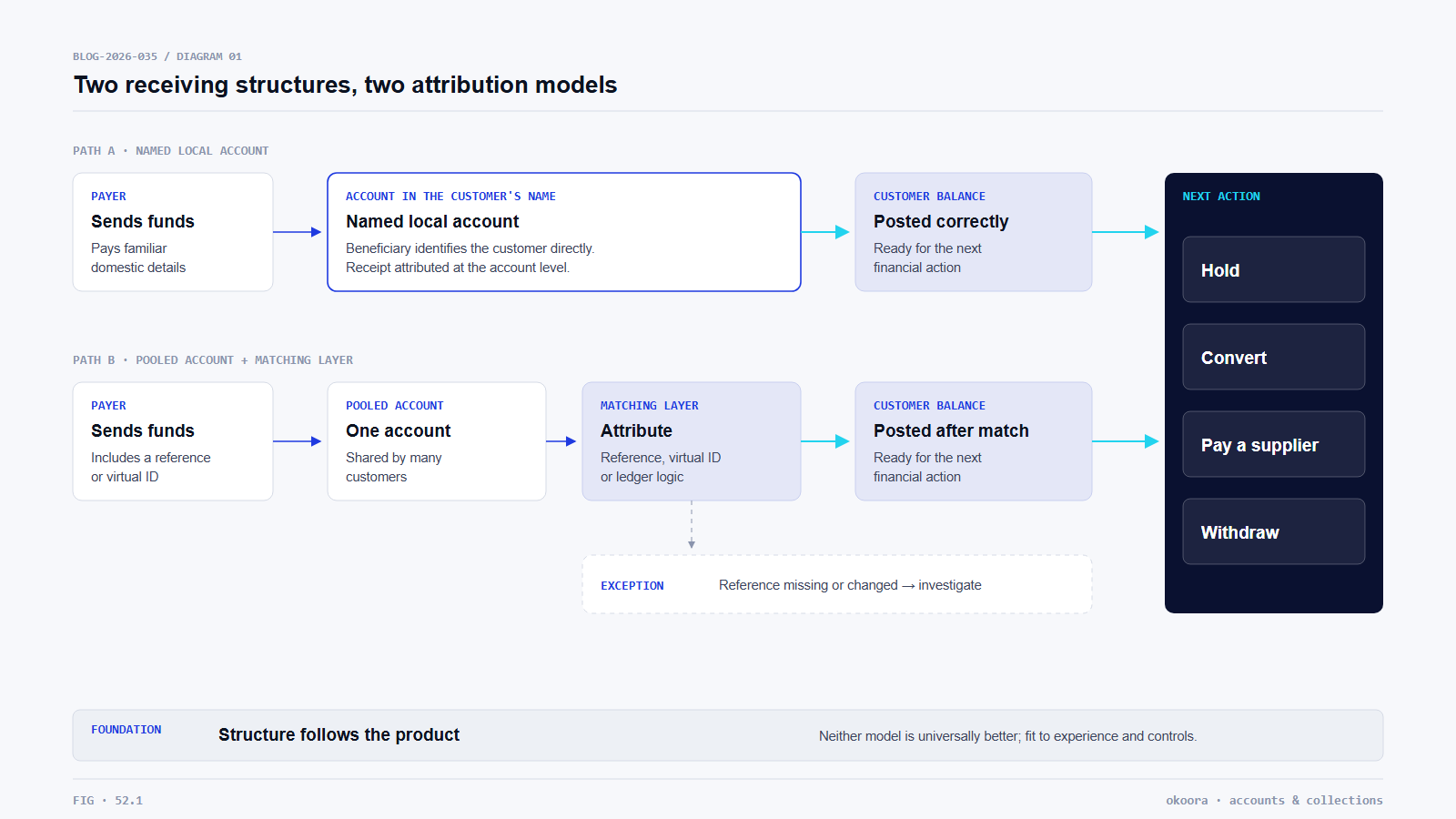
A named local account gives the end customer account details that identify that customer directly. The payer sees the beneficiary it expects to pay, and the incoming funds can be associated with that customer at the account level. For a platform serving many businesses, this can make the financial experience feel much closer to a direct banking relationship even though the platform is delivering the service through financial infrastructure underneath.
Pooled accounts solve a different problem
A pooled structure can be efficient when many customers receive through one underlying account and the provider can reliably identify each receipt through references or virtual account logic. It can reduce the number of account relationships that need to exist underneath the product. But it also moves more responsibility into the matching layer. The system has to determine which customer owns each incoming payment, what happens when a payer omits or changes a reference, and how the platform explains the account relationship to the end customer.
Reconciliation is where the difference becomes operational
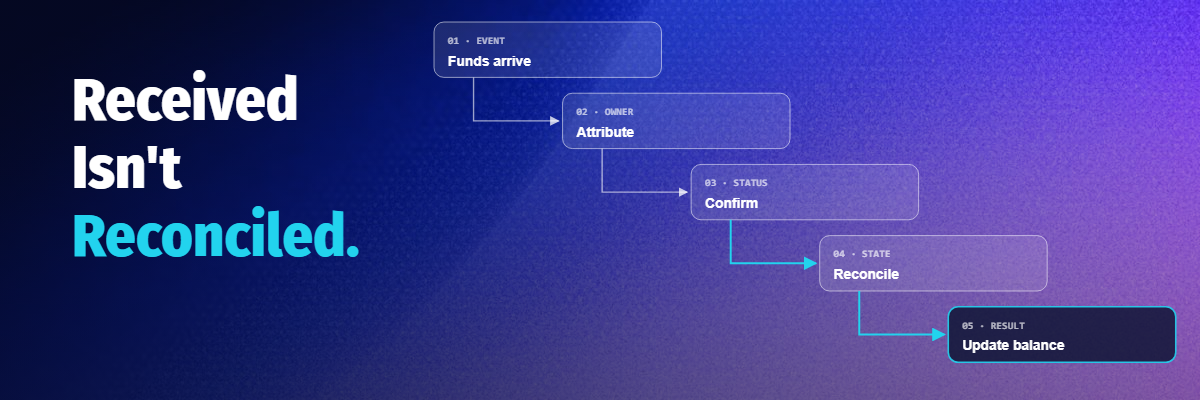
The account structure matters most when money arrives. A useful collections product should not stop at “funds received.” It should know which customer the money belongs to, post the receipt to the correct balance or ledger, preserve the relevant transaction record and make the new state available to whatever happens next. If the customer wants to convert the funds, pay a supplier or withdraw them, the receipt needs to become usable financial state rather than another line item waiting for manual investigation.
Local details can also change payer behavior
A payer that can send to familiar domestic account details may avoid an international payment flow altogether. That can simplify the payer experience and can change cost, speed and operational friction. The exact benefit depends on the market, rail, currency and provider arrangement, but the principle is broader: collection design is not only about where the beneficiary holds money. It is also about how easily the payer can deliver it.
The right structure depends on the product you are building
A pooled account can be perfectly suitable for some use cases. A named-account model can be materially stronger for others. The useful evaluation is not “which model is more advanced?” It is whether the structure supports the experience, compliance model, reconciliation quality, customer ownership, currency coverage and downstream financial actions the product needs to provide.
Where Okoora fits
Okoora supports financial institutions, platforms and businesses that want to offer accounts and money movement under their own brand. The account experience can connect to collections, multi-currency balances, conversion, payouts and the controls around them, so receiving money is part of a wider financial workflow rather than a disconnected endpoint. The result is a clearer path from payer to customer balance and from customer balance to the next financial action.