 Okoora TeamOkoora
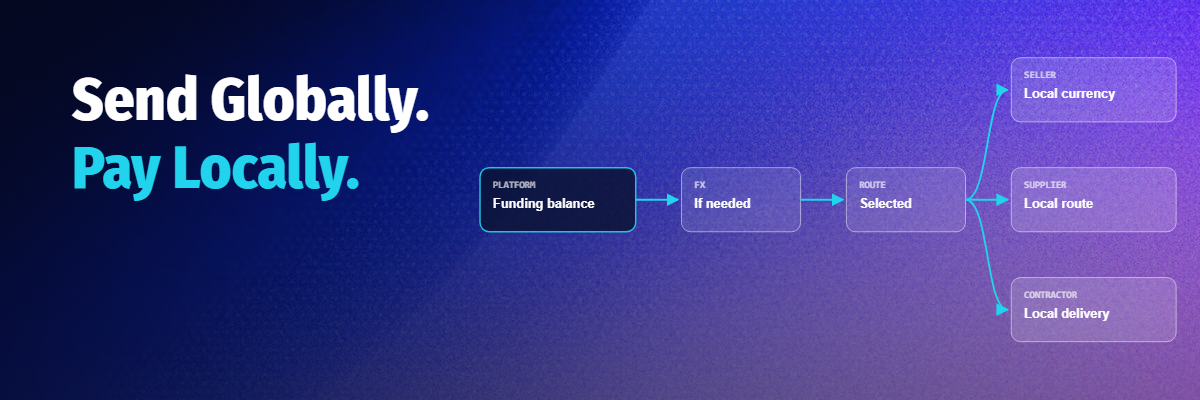
The platform sends globally. The recipient wants to get paid locally
Marketplaces, software platforms, staffing networks and other businesses increasingly need to pay sellers, suppliers or contractors in many countries. From the platform's perspective, this is a cross-border payout problem. From the recipient's perspective, the ideal experience is often much simpler: receive the expected amount in a familiar local currency through a route that works in the local market.
Separate the funding currency from the payout currency
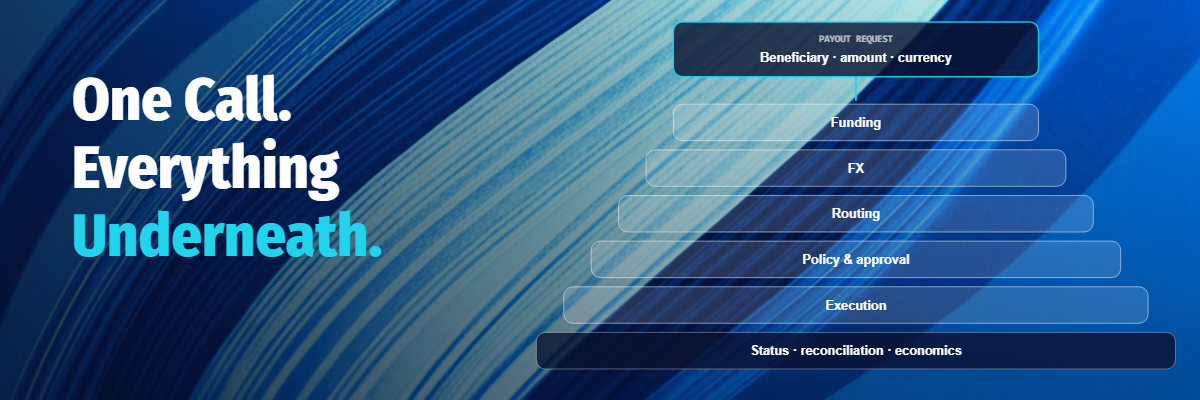
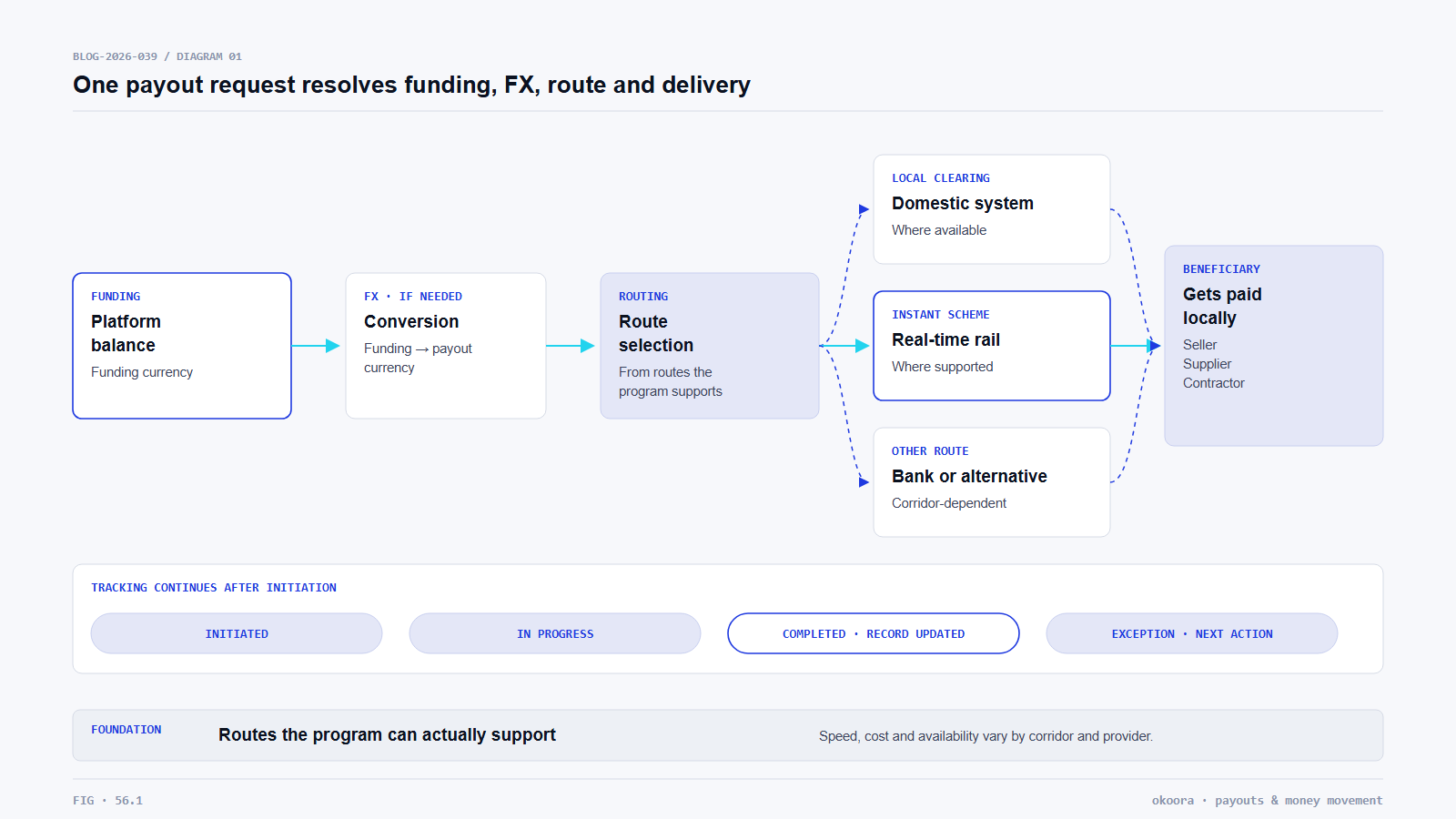
A platform may hold funds in one currency while the beneficiary expects another. That means the payout is not only a payment instruction. It may also contain an FX decision. The system needs to know the funding source, the currency to deliver, the applicable conversion economics and the route that can complete the payout. Treating FX as a separate manual step adds friction and makes the money movement harder to track end to end.
Local rails can change both experience and economics
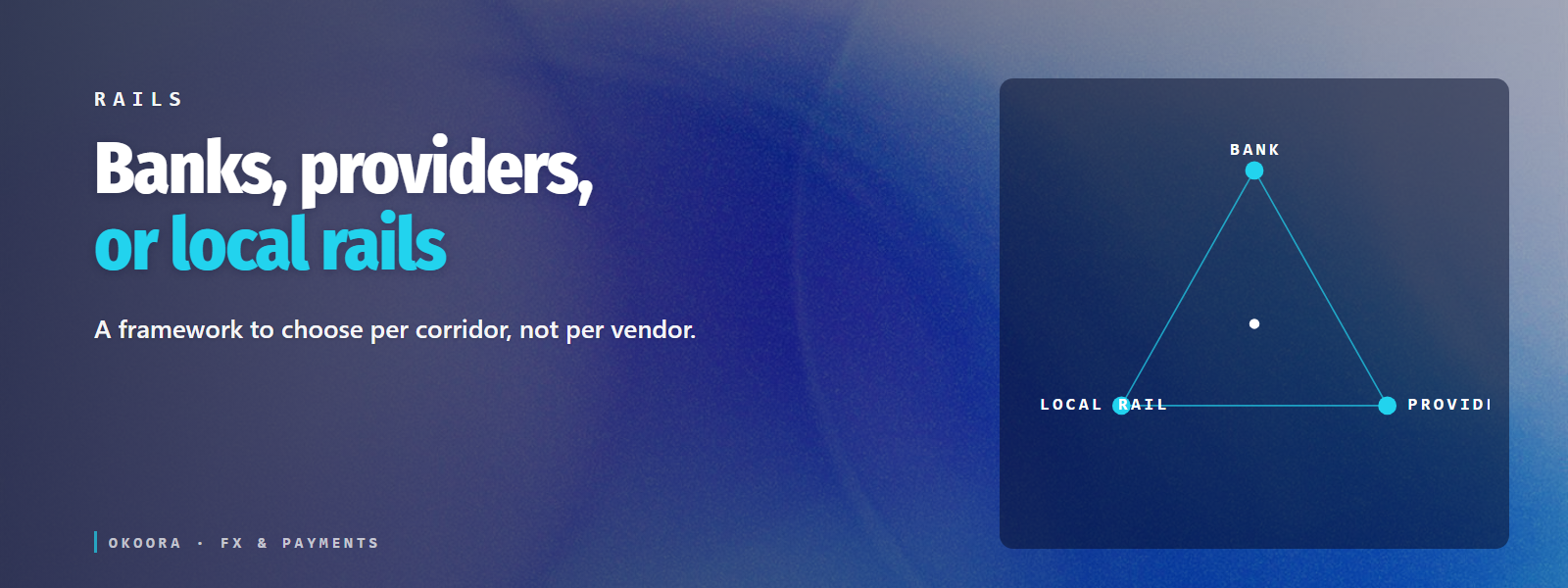
Where a local clearing or instant payment route is available, the beneficiary may receive through the domestic system rather than through a traditional international wire. The potential advantage depends on the corridor and provider, but local delivery can affect speed, fees and the information the beneficiary sees. A global payout product therefore needs routing logic, not merely a list of countries.
One route will not fit every market
Some destinations support fast local clearing. Others require a different banking route. Some use mobile or alternative payment methods. The product should select from the routes it can actually support and preserve the conditions that matter to the transaction. The end user should not have to become a payments architect in order to get paid.
Tracking should continue after the payout is initiated
A payout is not complete because an API accepted the request. The platform needs a usable status from initiation through the strongest completion evidence the route can provide. Failures, rejected beneficiary details and other exceptions need an explicit next action. Successful payouts should update the customer record and the relevant balance without leaving manual follow-up behind.
The platform may also want to monetize the activity
Once payouts sit inside the platform's own customer relationship, the financial flow can become part of the business model. The platform may apply pricing to the payout, to FX or to another supported financial service. This creates a second requirement: transaction economics and customer experience must work together. A payout product that moves money but cannot support controlled pricing leaves commercial value on the table.
Where Okoora fits
Okoora supports platforms and financial institutions that want to offer payouts under their own brand. Currency conversion, route selection, settlement and transaction tracking can operate underneath the customer experience, allowing the platform to serve recipients across markets without assembling a separate financial stack for each corridor.