 Okoora TeamOkoora
Virtual account numbers (VANs) solve one of the most persistent operational problems in subscription billing. VANs automatically match incoming payments to the right customer, plan, and period, with no manual intervention, spreadsheet matching, or finance team overhead. For SaaS platforms, subscription businesses, and recurring revenue operators managing hundreds or thousands of active subscribers, VAN-based reconciliation replaces a fragile manual process with a systematic one.
What Are Virtual Account Numbers and How Do They Work in Subscription Billing?
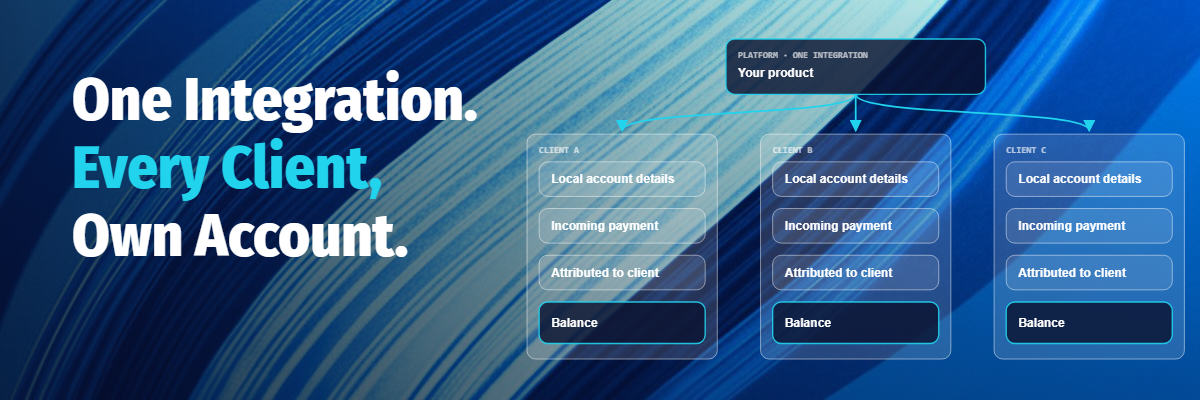
A virtual account number is a unique bank account identifier assigned to a specific customer, entity, or billing relationship. It looks and functions like a standard bank account number in that buyers make transfers to it exactly as they would any other account. However, every VAN maps back to a single record in your system. When a payment arrives, the VAN it was sent to instantly identifies the payer, the subscription, and the expected amount.
In subscription billing, this matters because the core reconciliation problem is identity. When 500 subscribers send monthly bank transfers, the only way to match each payment to the right account is by recognizing who sent it.
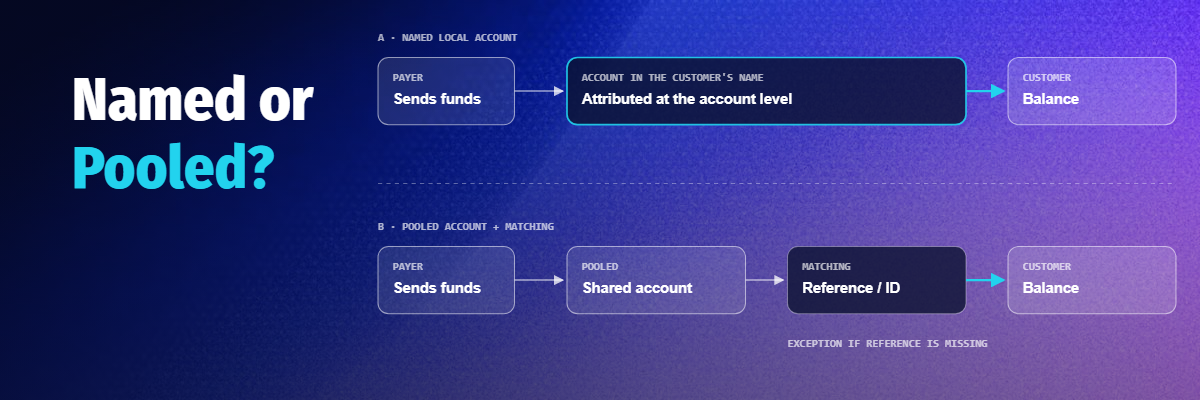
Bank reference fields are filled in inconsistently by payers, names don’t always match system records, and partial payments create gaps that take hours to resolve manually. VANs eliminate the identity problem entirely because the account number itself is the identifier. No matching logic is required.
Okoora’s virtual account number infrastructure issues dedicated VANs per subscriber or billing entity, routes incoming payments to a consolidated collection account, and passes structured transaction data, including payer, amount, timestamp, and VAN reference, directly to your billing or ERP system via API.
Why Subscription Billing Reconciliation Breaks Without Dedicated Account Numbers
Manual reconciliation for subscription businesses typically works until it doesn’t, and the breaking point arrives faster than most finance teams expect. At low subscriber counts, a finance team member can match bank statements to CRM records in a few hours per month. At 200+ active subscriptions with variable billing cycles, plan tiers, mid-cycle upgrades, and occasional partial payments, that same process takes days and introduces errors that compound into your revenue reporting.
The Specific Failure Modes Are Predictable:
Reference field inconsistency. Subscribers making bank transfers enter payment references manually. “ACME Corp Monthly,” “Acme Corporation,” and “ACM-INV-0041” are all the same customer, but none of them match automatically against a system record without human review.
Multi-currency complexity. When subscribers pay in different currencies, each transaction involves a currency conversion. Reconciling the received amount against the invoiced amount requires both identity matching and currency normalization before you can confirm a payment is complete.
Partial payments and timing mismatches. A subscriber who pays 90% of an invoice in a single transfer and the remainder a week later creates two records that must be linked, matched, and closed manually in most systems that don’t use VAN-based collection.
Audit trail gaps. When reconciliation happens through human judgment rather than systematic matching, the audit trail is a spreadsheet. For businesses subject to financial reporting requirements or investor scrutiny, that’s a liability.
Each of these problems scales linearly with subscriber count. VAN for billing reconciliation breaks that scaling relationship by making matching systematic from the moment of collection.
How Virtual Account Numbers Payment Infrastructure Automates the Reconciliation Workflow
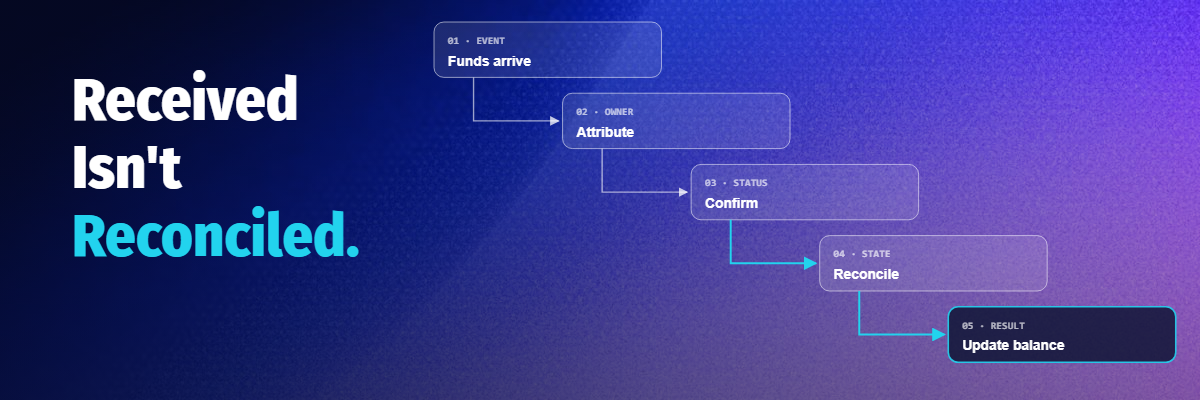
When each subscriber pays to their own dedicated VAN, the reconciliation workflow changes fundamentally. Incoming payments are pre-identified at the infrastructure layer before they reach your finance team, your billing system, or your bank statement export. The matching work that previously happened manually after funds arrived now happens automatically at the point of collection.
The Automated Workflow Looks Like This:
Collection. A subscriber initiates a bank transfer to their assigned VAN. The account number itself carries no sensitive data. It’s simply a routing identifier unique to that subscriber relationship.
Identification. The payment hits the collection infrastructure. The VAN maps to a customer record, a subscription ID, and an expected billing amount. This lookup happens in milliseconds, not hours.
Validation. The amount received is compared with the open invoice. Full payment closes the invoice automatically. Partial payment flags the shortfall and routes it for exception handling. Overpayment triggers a credit balance workflow, all without manual review of a matching payment.
Data delivery. Structured payment data, including customer ID, VAN reference, amount received, currency, and timestamp, is pushed to your billing system or ERP via webhook or API. Your books update in real time, not at month-end.
Reporting. Because every payment is matched at collection, your receivables position is accurate at any moment. DSO calculations, churn analysis, and revenue recognition all operate on clean data rather than partially reconciled estimates.
For finance teams running month-end closes, this shift from retrospective reconciliation to real-time matching is the operational equivalent of moving from batch processing to streaming data.
What To Look For in a VAN for Billing Reconciliation Platform
Not all virtual account number implementations are equivalent. The differences that matter most for subscription billing operators involve how VANs are structured, how payment data is delivered, and how the system handles the edge cases that define real-world subscription billing.
Account issuance model. Some platforms issue a limited pool of shared virtual references rather than true dedicated account numbers. This reintroduces the matching problem, as references can still be mis-entered or reused. True VANs are unique, persistent identifiers, including one account number per subscriber, that remain active for the life of the billing relationship.
Multi-currency support. B2B subscription businesses frequently bill in multiple currencies. The VAN infrastructure needs to collect in local currency per market, normalize to your reporting currency, and pass both the received amount and the converted amount in the transaction record. Currency ambiguity in the data layer creates the reconciliation problems you’re trying to eliminate.
Webhook and API data quality. The value of VAN-based reconciliation depends entirely on the quality of data delivered downstream. Evaluate what fields are included in the payment notification, how quickly they’re delivered after funds arrive, and whether the API supports your billing system’s data model natively.
Exception handling. Edge cases such as partial payments, duplicate transfers, and payments to deactivated VANs happen in every subscription billing operation. A production-ready platform routes these exceptions systematically rather than surfacing them as unmatched transactions in a bank statement.
Audit and reporting layer. For finance teams and auditors, the ability to pull a complete transaction history for each subscriber against a VAN reference provides an audit trail that manual reconciliation can never reliably produce.
Okoora’s VAN infrastructure is built for this billing use case: persistent dedicated accounts per subscriber, multi-currency collection, real-time webhook delivery, and structured exception routing, all accessible through a single API integration.
How To Implement Virtual Account Numbers Reconciliation for Your Billing Stack
The integration path for VAN-based subscription billing reconciliation is straightforward when the infrastructure layer is designed for it. Most platforms complete a working implementation in one to three weeks, depending on the complexity of their billing system and the number of markets they collect from.
Step 1: Define your account structure. Decide whether VANs are issued per subscriber, per subscription, or per billing entity. For most SaaS and subscription businesses, per-subscriber is the right model because it handles plan changes, upgrades, and multi-product billing without issuing new account numbers.
Step 2: Map your reconciliation logic. Before integration, document how your billing system currently handles payment matching. Define what a “matched” payment looks like, such as a full invoice amount within X days, and what exception workflows exist for partial payments and overpayments. This logic is encoded in the VAN platform configuration, not rebuilt manually each month.
Step 3: Integrate the API and configure webhooks. Connect Okoora’s API to your billing system or ERP. Configure webhooks to push payment notifications to the endpoint your system uses to update invoice status. Test with live transactions in a staging environment before going live.
Step 4: Issue VANs to existing subscribers. For existing subscriber bases, VANs can be issued in bulk and communicated to subscribers in a single billing cycle notification. Most subscribers transition without friction — they’re replacing one account number with another.
Step 5: Measure reconciliation time and exception rate. Track how long month-end close takes before and after implementation. Monitor the exception rate and use it as the ongoing measure of reconciliation health.
If your finance team is spending significant time each month on payment matching, or if your subscriber base is growing faster than your reconciliation process can scale, speak with Okoora’s team about how VAN infrastructure maps to your specific billing architecture.
Frequently Asked Questions
Do subscribers need to do anything differently when paying to a VAN? No. Subscribers make transfers exactly as they would to any bank account. The VAN looks and works like a standard account number. The intelligence is entirely on the collection side — subscribers don’t need to change their payment behavior.
What happens if a subscriber pays the wrong amount? Partial payments and overpayments are routed as exceptions with full transaction data attached. Your billing system receives the actual amount paid alongside the expected amount, so your team can resolve discrepancies against a clear record rather than hunting through bank statements.
Can VANs handle recurring billing across multiple currencies? Yes. Okoora issues VANs in local currency per market, so a subscriber in Germany pays to a EUR-denominated VAN, a subscriber in the UK pays to a GBP-denominated VAN, and both transactions reconcile against their respective invoices without manual currency conversion work.
How long does a VAN remain active? VANs are persistent for the life of the subscriber relationship. A deactivated account (for churned subscribers) stops accepting new payments and routes any late arrivals to an exception queue for review.
Is VAN-based reconciliation suitable for enterprise B2B billing? It’s particularly well-suited to enterprise B2B, where invoice amounts vary, payment timing is less predictable, and buyers often pay via bank transfer rather than card. The combination of dedicated account numbers, multi-currency collection, and structured transaction data addresses exactly the complexity that makes enterprise billing reconciliation expensive at scale.