 OkooraEditorial Team
A strong bank relationship and broader market access are not opposites
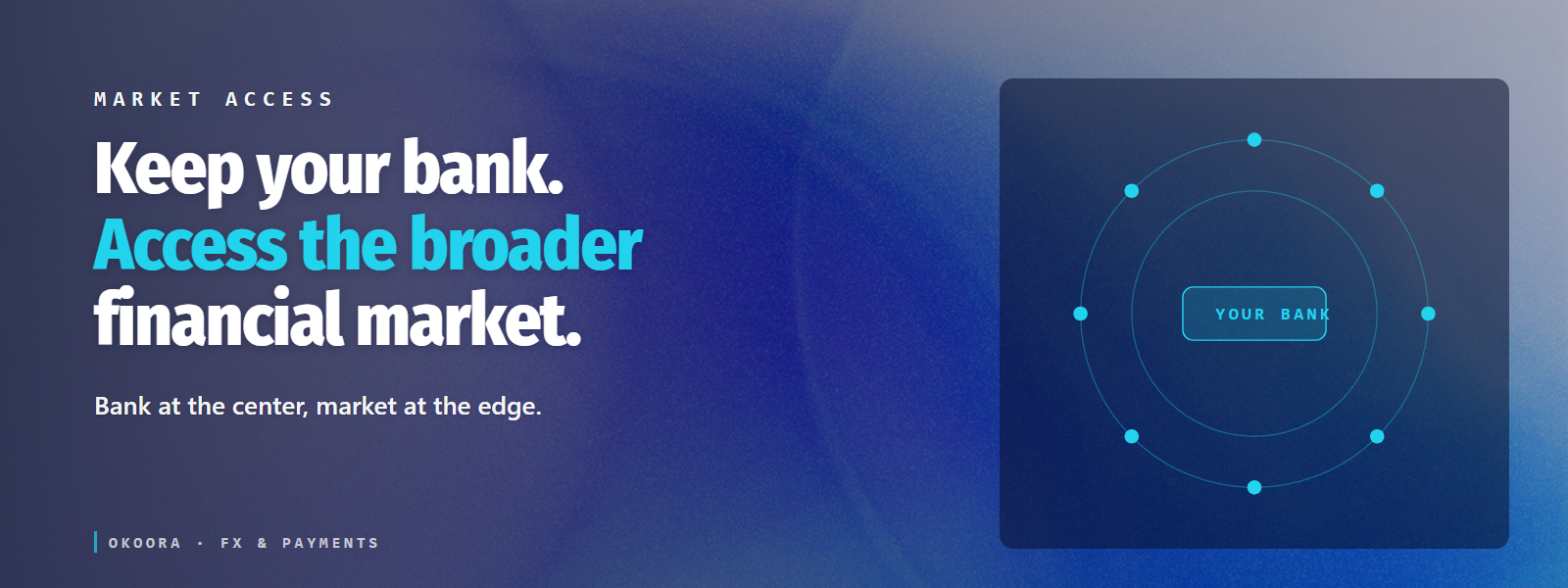
A business can value its bank and still want more financial optionality. The bank may provide credit lines, financing, cash management, payment infrastructure, treasury support and years of operational history. Those things matter. But they do not require every payment, currency conversion or hedge to depend on one provider by default. There is a different model: Keep the relationship. Keep the credit. Keep the operating setup that works. Add broader access around the financial action. That distinction is becoming more important as financial markets and payment infrastructure become more fragmented, more electronic and more connected.
Relationship value and transaction value are different
A bank relationship can be strategically valuable even when another provider offers a stronger execution option for a specific transaction. Those are two different forms of value. Relationship value can include: Credit capacity. Financing. Deposits. Cash management. Local banking support. Long-term institutional knowledge. Transaction value can include: FX pricing. Hedge pricing. Payment routing. Liquidity. Settlement terms. Speed. The company should not have to sacrifice one to improve the other. A better model lets the treasury team preserve relationship value while still testing the market when the transaction justifies it.
The FX market already works this way
Institutional FX markets are built around multiple execution methods and multiple liquidity sources. The Bank for International Settlements describes a decentralised and fragmented market where customers can trade directly with dealers or access multiple providers through multi-dealer platforms and liquidity aggregators. Those tools exist because one dealer is not the whole market. Corporate treasury can apply the same principle without becoming a trading desk. The company can keep existing banks while adding access to other approved liquidity providers. Then, for a material FX transaction, it can compare executable alternatives before deciding where to trade.
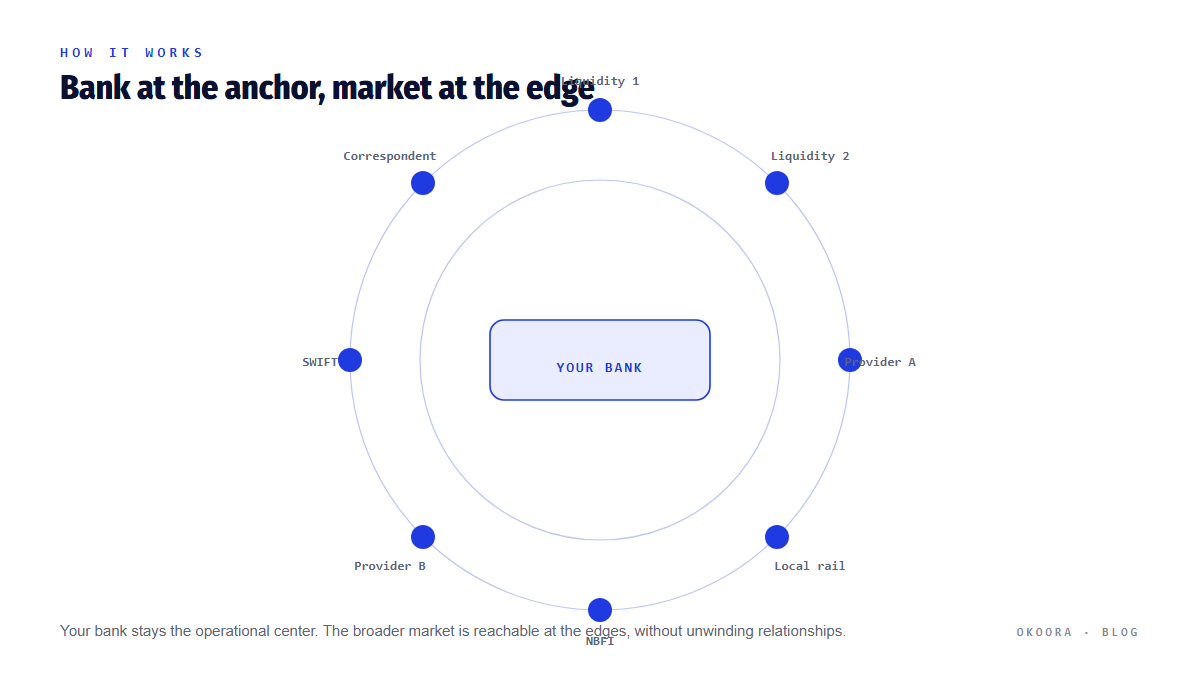
Your existing bank may still win the trade
Broader market access does not imply that the existing bank should lose the business. It may still provide the strongest result. The bank may have attractive liquidity in the currency. It may value the broader relationship. It may provide credit terms that matter. It may be the best provider for a specific hedge structure. The benefit of broader access is not that another provider always wins. It is that the company can see whether the existing bank is genuinely the strongest available option for that transaction. That is a much better basis for the relationship than blind dependence.
Payment relationships can work the same way
The same logic applies to payments. A business may use its bank for strategic cash management and still have access to alternative payment providers or local rails for specific corridors. One route may be appropriate for a large international wire. Another may work better for a recurring supplier payment through local clearing. A third may fit a payment that requires currency conversion. The business does not need to choose one payment provider for every possible use case. It can maintain the existing bank relationship and expand the route set around it.
Hedging also benefits from a wider provider set
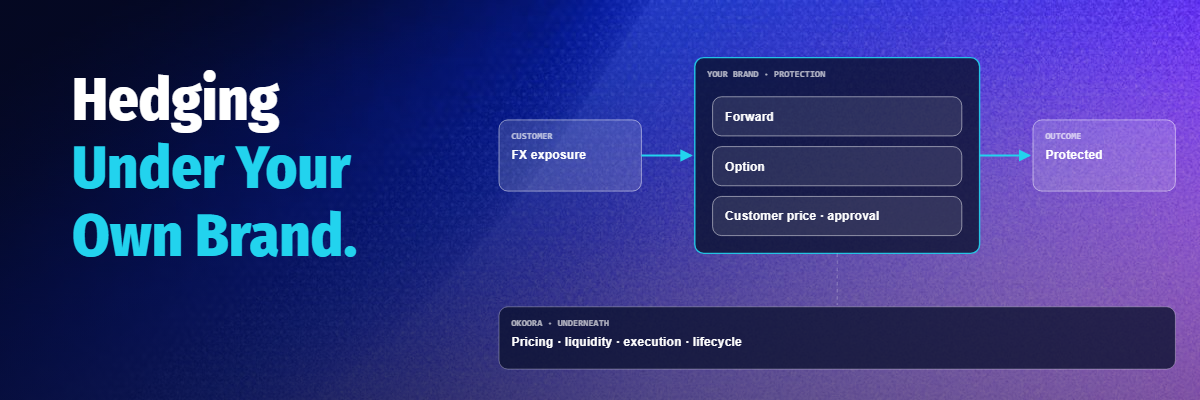
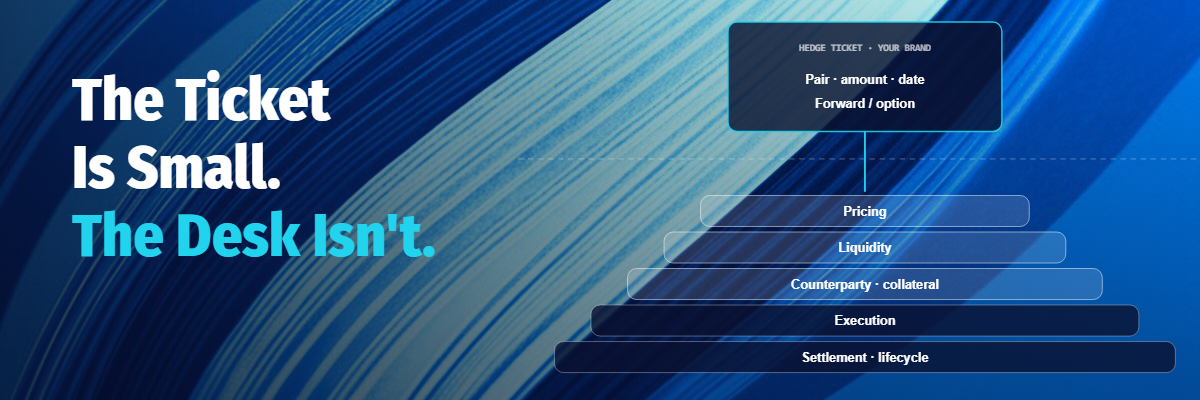
Hedge decisions often combine two questions: What protection does the business need? Where should that protection be priced and executed? The first question belongs to the company. The second can be tested across several approved banks or liquidity sources. Forwards, swaps and options can be priced differently by different providers because liquidity, inventory, funding, credit and appetite are not identical. A company can preserve its existing bank limits and relationships while still comparing a material hedge with additional providers. The relationship stays. The market around the transaction gets wider.
Broader access improves information before it changes execution
One of the most important benefits is informational. A company with one price does not know whether the market is tight or widely dispersed. A company with one payment route does not know whether another approved path would produce different economics. A company with one hedge quote does not know how competitive that quote is. Broader access makes those alternatives visible. That can improve the decision even when execution ultimately stays exactly where it was. Sometimes the value is not moving the trade. It is knowing that staying put is the right choice.
You do not need to move every transaction
There is also no reason to compete every financial action across every provider. That would create unnecessary complexity. A strong policy can define which transactions deserve broader market testing. For example: Routine low-value payments may follow a default route. Larger cross-border payments may require route comparison. Material FX conversions may be tested across several approved providers. Large or unusual hedges may require multiple executable quotes. Transactions outside normal policy can stop for human review. The objective is not permanent shopping. It is better decisioning where the economics justify it.
Operational setup matters before the market does
An alternative provider is not useful if the business cannot actually execute with it. That is why broader access has to be operational, not theoretical. The company may need: Approved legal relationships. Counterparty onboarding. Payment connections. Settlement instructions. Credit or collateral frameworks. Compliance approval. Technical connectivity. Reconciliation processes. Once those pieces exist, the company has real optionality. Before they exist, it only has a list of possible providers.
The operating layer should absorb the complexity
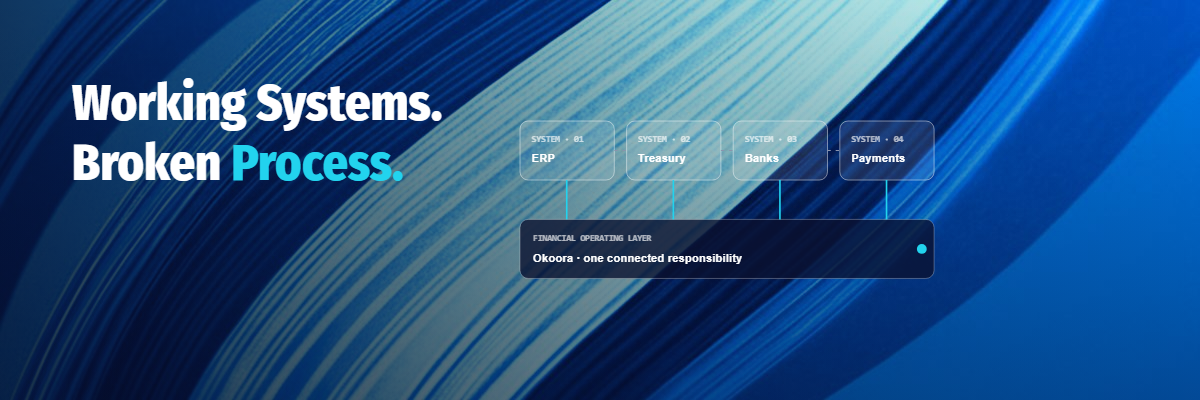
A major risk in a multi-provider model is fragmentation. More banks can mean more portals. More providers can mean more files. More payment rails can mean more exceptions. More FX sources can mean more manual quote comparison. That is not a better model. The value appears when one operating layer sits above the provider set. The finance team starts with the financial need. The system determines the eligible routes and providers. The team sees the relevant alternatives. Policy narrows the choice. Execution happens through the selected path. The result returns into one financial state. The infrastructure becomes broader while the user experience becomes simpler.
Bank relationships can actually become clearer
Broader access can also improve the quality of bank relationship management. Treasury teams can see: Where the bank is consistently competitive. Where another provider is stronger. Which products benefit from the bank's credit. Which currencies justify broader liquidity access. Which corridors need alternative payment routes. That creates a more deliberate allocation of business. Instead of sending transactions to a bank simply because the relationship exists, the company can send business where the bank is genuinely strong and use other providers where they add value. That can make the relationship more strategic, not less.
The goal is not bank independence
A useful distinction is important here. The objective is not to become independent of banks. Banks remain fundamental to global financial infrastructure. The objective is to become less dependent on one provider for every financial action. That means preserving important relationships while avoiding unnecessary concentration in pricing, routing or execution. The result is a more resilient and informed operating model. Not bank replacement. Provider optionality.
A practical model
A business can apply this approach in a simple sequence: Keep existing strategic banks and providers. Identify the financial activities where one-provider dependence matters most. Add approved alternatives where the economics justify it. Connect those alternatives into one operating workflow. Define when transactions should be compared. Apply policy to the eligible provider set. Execute through the chosen provider. Return the result into the same financial state. Review performance over time. The model is additive. Nothing valuable has to be removed before broader access can be created.
Where Okoora fits
Okoora sits above existing financial relationships as an intelligence, connectivity and execution layer. A company can keep its banks, limits and providers while Okoora connects broader financial infrastructure around them. That can include banks, brokers, liquidity providers, payment rails, clearing networks and execution venues. For FX, the customer can compare multiple executable alternatives through the FX Marketplace. For hedging, the same hedge requirement can be tested across approved providers. For payments, the route can be selected from the available infrastructure according to currency, destination, economics and policy. The customer keeps the relationship. The customer keeps the control. Okoora adds the market around it. That is the model: Keep your bank. Add the market around it. Next step: See how Okoora lets businesses keep existing banks and providers while adding broader market access, routing, liquidity and execution optionality around each financial action.
Related reading: How to Get Better FX Pricing Without Replacing Your Bank, Why More Financial Providers Can Create Better Execution Optionality.