 OkooraEditorial Team
Fresh data is not the same as a live financial state
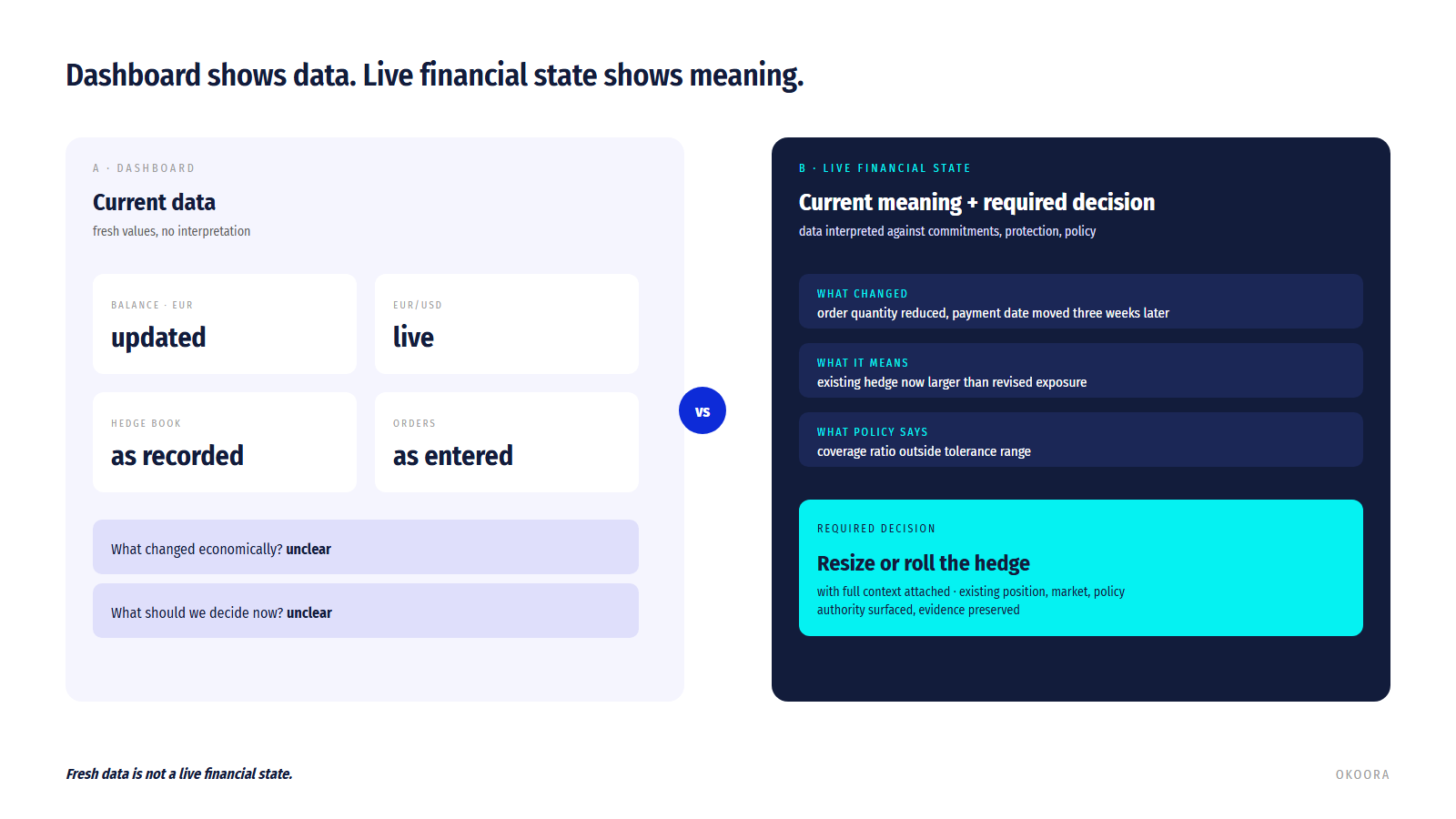
A dashboard can update every few seconds and still leave Finance working with an incomplete picture. The exchange rate is current. The bank balance is current. The ERP data is current. The hedge book is current. Yet the company may still not know what changed economically or what decision is now required.
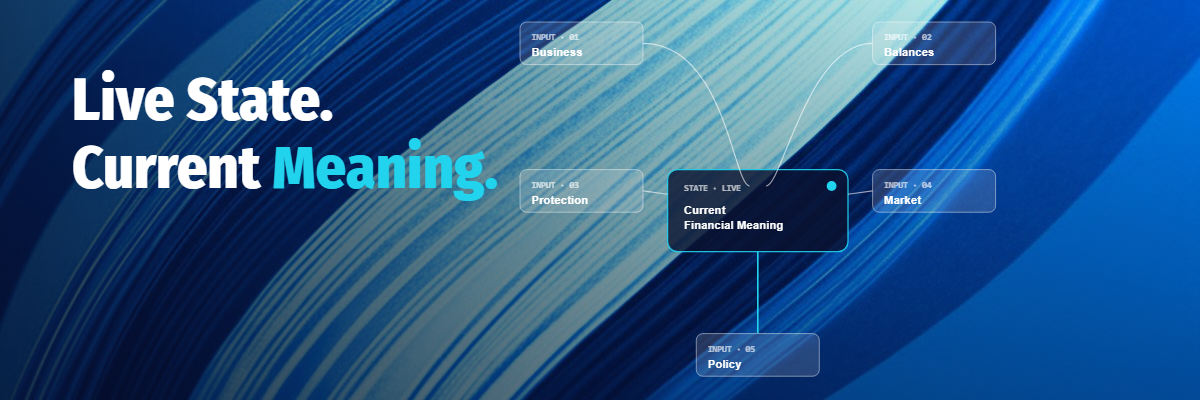
A live financial state is not simply a collection of fresh data. It is a current understanding of the financial responsibility created by the business and how that responsibility changes as the business, market and policy environment change.
Business reality is one part of the state
The financial state begins with what the business is actually doing. Orders are created. Purchase commitments change. Deliveries move. Invoices arrive. Sales forecasts change. Projects progress. Contracts create obligations. Customer activity changes expected cash.
These events alter future financial requirements before they necessarily appear as settled transactions. A live state therefore needs to understand the business events that create or change financial responsibility, not only the transactions that already reached the ledger.
Existing financial actions are another part
The company may already have acted on an earlier version of reality. It may hold currency. It may have arranged funding. It may have hedged an exposure. It may have scheduled a payment. It may have committed cash elsewhere.
Those actions now shape the available choices. A current financial state has to understand what is already protected, funded, committed or reserved. Otherwise, the system risks recommending an action that ignores work the company has already done.
The market changes the meaning of the same position
A position does not have one fixed economic meaning. Exchange rates move. Forward points change. interest rates move. Liquidity changes. Funding costs move. Available provider alternatives change.
The same business commitment can therefore mean something different today than it meant last week. Current market data matters, but only when it is interpreted against the company's actual financial position.
Policy turns state into permitted action
A current state is still not enough unless the system understands the company's rules. Policy may define required protection, approval authority, liquidity thresholds, permitted providers, payment limits, timing ranges or exception conditions.
This is what converts a financial picture into an operating decision. The system can ask whether the current state is inside policy, whether a decision is required and what actions are actually permitted.
A live state must preserve timing
Timing is central to financial meaning. Two obligations with the same amount and currency can require different decisions if one is due next week and the other in six months. A hedge can match the amount but miss the date. A cash balance can look sufficient today but be needed for another obligation first.
A live financial state therefore needs to preserve not only what exists, but when it matters. Timing connects future obligations, current liquidity, market alternatives and policy into one economic picture.
The state should explain what changed
A useful system should not force Finance to compare yesterday's dashboard with today's dashboard and infer the difference manually. It should be able to explain the change.
The order quantity changed. The payment date moved. The expected inflow fell. The hedge coverage no longer matches. The currency balance is sufficient, so no conversion is needed. A policy threshold was crossed. A new market alternative became relevant.
This explanation is what makes the state operational. It connects the updated facts to the meaning of the change.
The state should also explain what requires attention
Not every change requires a decision. Some changes are immaterial. Some remain inside policy. Some offset one another. Some have already been handled by existing financial actions.
A live state should therefore surface the subset of changes that matter. That reduces noise and helps Finance focus on decisions, exceptions and opportunities rather than on raw activity.
This is different from a dashboard
A dashboard answers what is happening. A live financial state should also help answer what the current reality means for the business. It keeps the relationships among commitments, balances, protection, market conditions, policy and authority alive over time.
That continuity is what allows financial software to operate recurring work rather than repeatedly asking people to rebuild the picture.
Where Okoora fits
Okoora can maintain a connected financial state across business activity, balances, commitments, existing protection, market alternatives, policy and timing. When the underlying reality changes, Okoora can update the financial meaning and surface what requires attention.
The value is not simply fresher information. It is preserving the financial context required to make the next decision from current reality.
Next step: See how Okoora can keep business reality, financial commitments, market conditions, protection and policy connected to current financial meaning.
Related reading: Why Financial Software Should Start With the Event That Creates Financial Responsibility, How to Keep Financial State Current Across a Multi-Entity Group, Why Financial Software Needs Context, Not Just Transactions, Financial Software Should Maintain State, Not Just Show Dashboards.